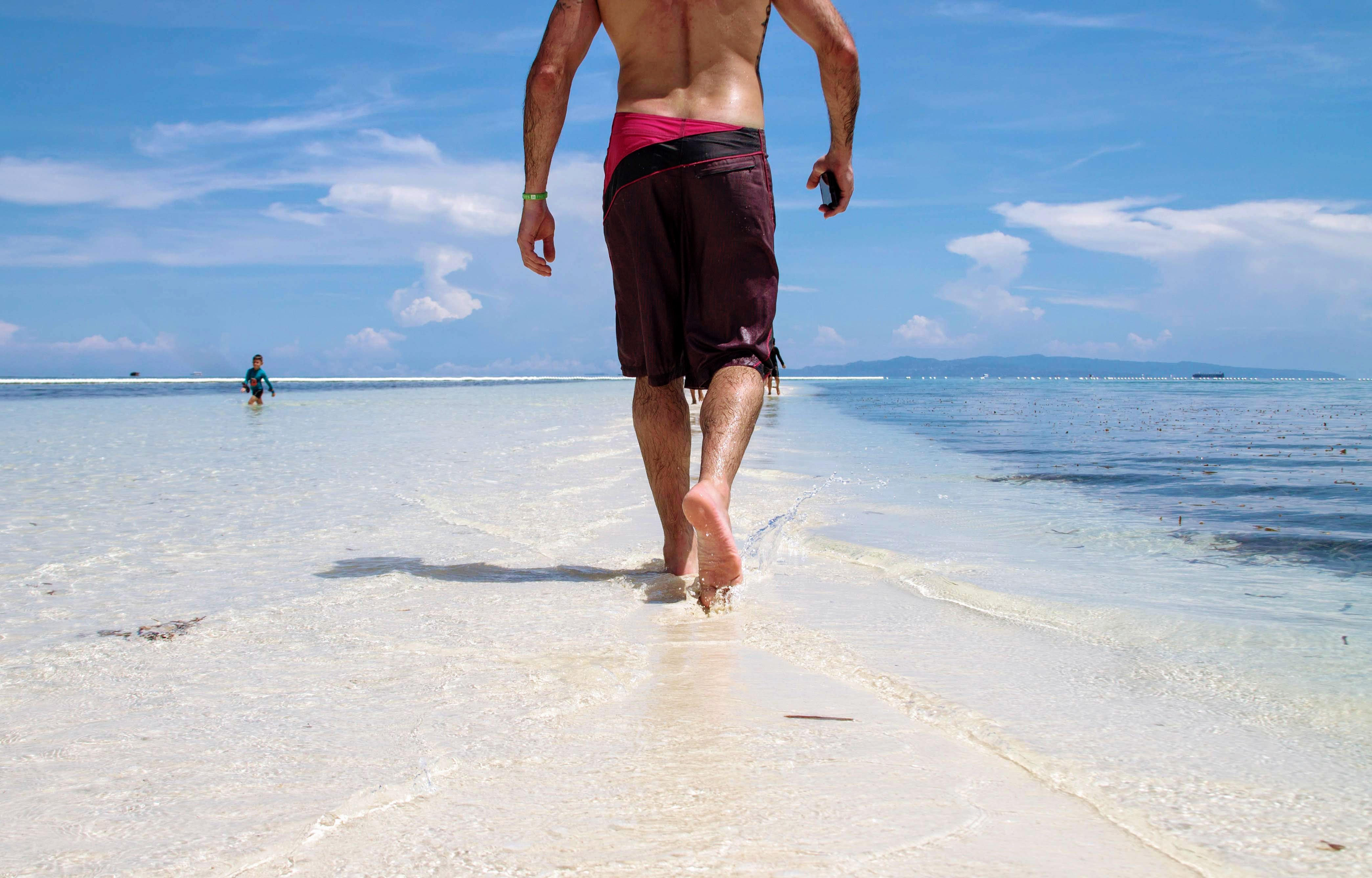
White sand beach, Philippines

Custom Trips Philippines

Custom Trips to the Philippines

The Philippines,
Your Way.

Tailor-made Philippines itineraries built around you — from the surf breaks of Siargao and the underground river of Palawan to the limestone bays of El Nido, the reefs of Coron, and the white sand of Boracay.
7,000+Islands
14 DaysSweet Spot
All StylesBudget to Luxury
Overview Regions The Islands Who It's For Itinerary When to Go FAQ

Why the Philippines

7,000 islands. Most travellers see a fraction of them.

The Philippines is one of Southeast Asia's most underrated destinations — and one of the most rewarding when you get the routing right. The challenge isn't finding beautiful islands; it's knowing which ones to prioritise and how to sequence them without spending half your trip on domestic flights. Done well, a Philippines itinerary moves fluidly: from the energy and diving of Cebu, through the effortless surf and village life of Siargao, across to Palawan's extraordinary limestone geography and the world-class snorkelling of Coron.

We've been designing custom trips to the Philippines for years — long enough to know which island combinations work, which transfers are painless and which are brutal, and which experiences are worth building an itinerary around.

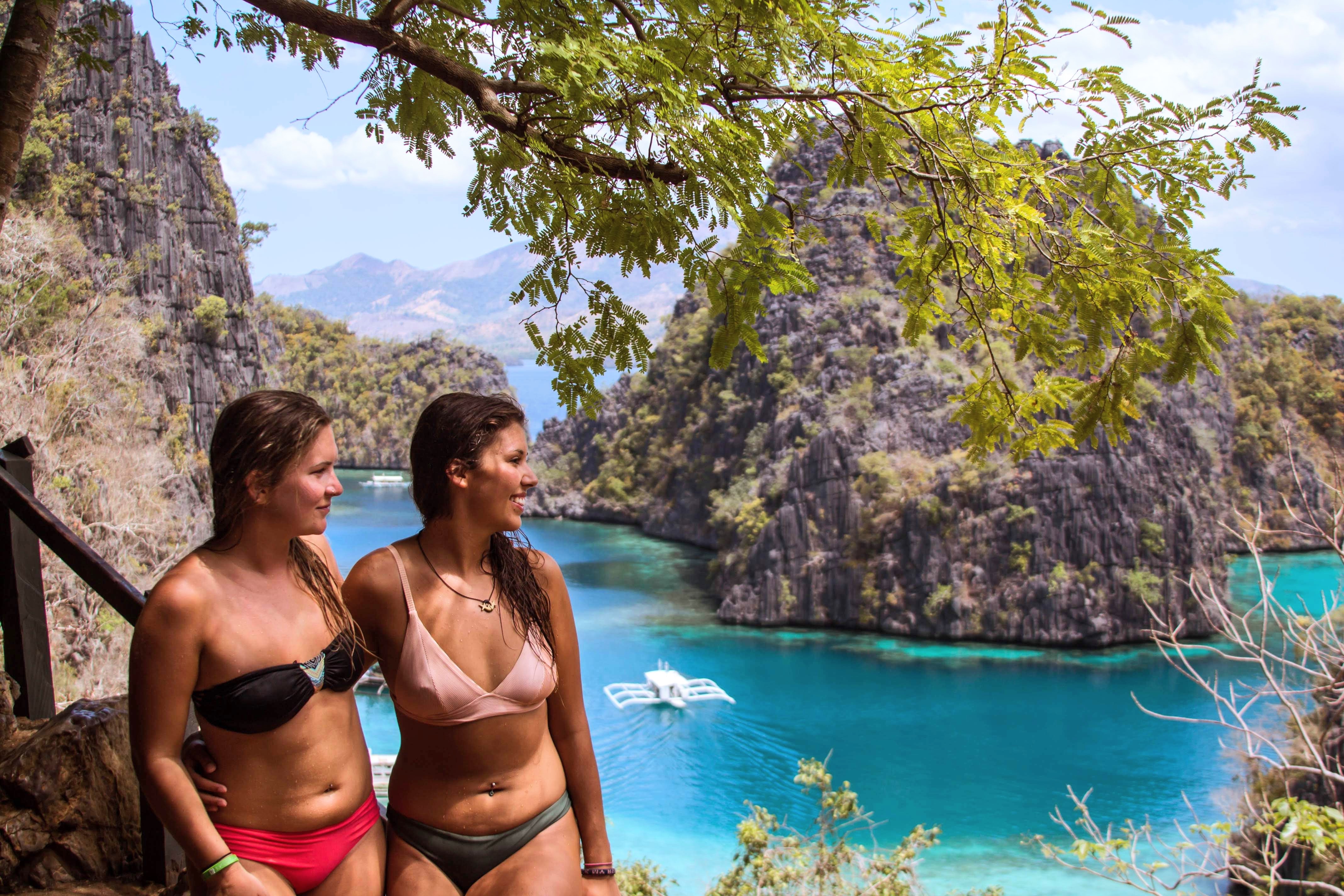
El Nido viewpoint, Philippines
7,641 Islands to Choose From

The Country

Three island groups, each with their own character.

The Philippines divides into the Visayas in the centre, Mindanao in the south, and Luzon in the north — with Palawan sitting apart as its own world entirely. Getting the right combination for your trip is what makes the difference between a great Philippines itinerary and one that feels scattered.

Balicasig Island, Visayas, Philippines
The Visayas — Cebu & Siargao
The heart of the Philippines. Cebu is the main hub — a city with genuine energy, world-class diving on its doorstep, and the whale sharks of Oslob and canyoneering of Kawasan Falls within easy reach. A short flight east takes you to Siargao, the country's surf capital and one of Southeast Asia's most laid-back islands — a place where the pace drops completely and the coconut trees outnumber the cars.
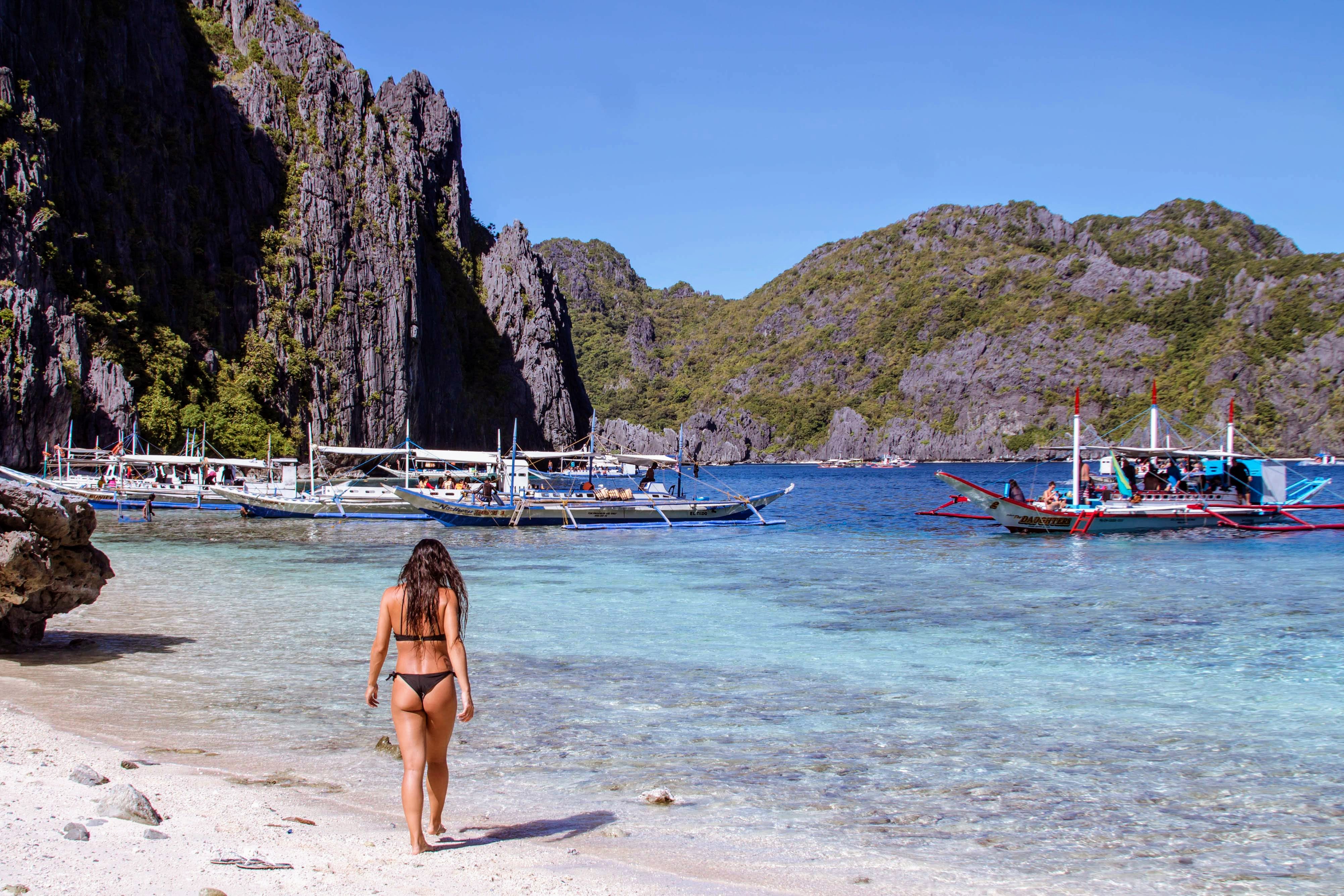
Palawan, Philippines
Palawan — El Nido & Coron
The jewel of the Philippines and one of the most geographically dramatic places in Southeast Asia. El Nido's limestone karsts rise hundreds of metres from turquoise lagoons — best seen by bangka boat on a full island-hopping tour. Coron, at the northern tip, is a diving paradise: Japanese shipwrecks from World War II lying in gin-clear water, surrounded by cathedral-like lagoons and coral gardens that rival anything in the Pacific.
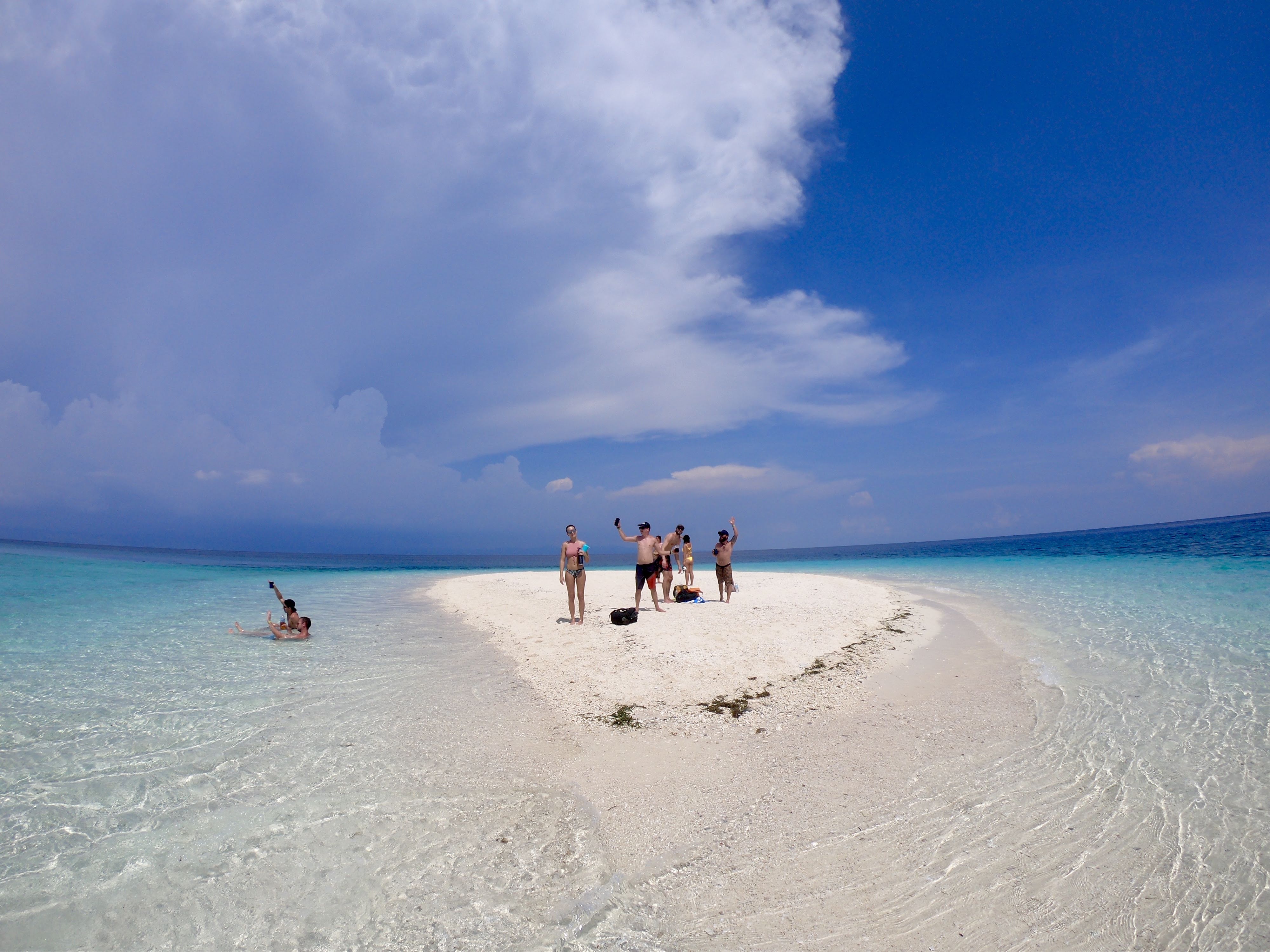
Beach, Philippines
Boracay & Luzon
Boracay's White Beach is one of the finest stretches of sand in Asia — powdery, long, and lined with restaurants and bars that come alive at sunset. It gets busy, but it earns its reputation entirely. Luzon, the northern island, holds Manila and the extraordinary Puerto Princesa Underground River — a UNESCO World Heritage site and one of the most remarkable natural experiences in the country, navigated by paddle boat through five kilometres of living cave.

The Islands

Each island does something the others can't.

The Philippines is not one destination — it's six or seven, each with a completely different character. The key is knowing which ones match what you actually want from the trip, and building a route that connects them without unnecessary backtracking.

Cebu
Gateway · Diving · Culture
The Philippines' second city and the natural starting point for most itineraries. Cebu has real urban energy — great food, excellent transport connections, and enough cultural depth to spend a full day in the city. But the real draw is what's outside: whale shark encounters at Oslob, canyoneering and the turquoise pools of Kawasan Falls, and some of the best diving in the Visayas just offshore.
Siargao
Surf · Slow Pace · Lagoons
One of Southeast Asia's great slow-travel islands. Cloud 9 is the surf break that put Siargao on the map — one of the best in Asia — but non-surfers love the island just as much. The pace here is genuinely unhurried: motorbike rides to coconut-fringed lagoons, island-hopping to Naked Island and Daku, and evenings at open-air restaurants that close when the owner feels like it.
Boracay
White Beach · Sunsets · Nightlife
White Beach lives up to every photograph — four kilometres of powder-fine sand bordering clear turquoise water, with a string of restaurants, bars, and resorts that animate brilliantly at sunset. Boracay gets busy, but it manages its visitors better than you might expect. Puka Shell Beach on the north end offers a quieter alternative when you want to escape the main strip.
Puerto Princesa
Underground River · UNESCO
Puerto Princesa is the gateway to one of the Philippines' most extraordinary natural wonders — the Underground River, a UNESCO World Heritage site and one of the longest navigable underground rivers in the world. A paddle boat carries you five kilometres into a living cave system, past cathedral chambers and extraordinary rock formations, with swallows and bats wheeling overhead. A half-day that stays with you for years.
El Nido
Lagoons · Karsts · Island Hopping
The image most people have of the Philippines — towering limestone karsts rising from water so clear you can see the bottom at ten metres depth. The island-hopping tours here (Tour A through D) visit hidden lagoons, snorkelling reefs, and secret beaches accessible only by bangka. Tour A, with the Big Lagoon and Small Lagoon, is essential. El Nido town itself has evolved into a genuinely good place to spend a few evenings.
Coron
Wreck Diving · Reefs · Lagoons
Coron is for those who want the Philippines at its most untouched. The dive sites here — Japanese warships sunk in 1944, now resting in warm, clear water — are among the most celebrated wreck dives on earth. Above the surface, Kayangan Lake and Twin Lagoon offer snorkelling and swimming in water that shifts from turquoise to aquamarine depending on the angle of the sun. Coron rewards those who make the effort to get there.

Who It's For

The Philippines works for almost any kind of traveller — when the islands are chosen well.

We've designed Philippines trips for couples on honeymoon, solo travellers, groups of friends, divers, surfers, and people who simply want the most beautiful beaches in Southeast Asia with as little hassle as possible. The island combination is everything.

Divers & Snorkellers
The Philippines is one of the world's great diving destinations — sitting inside the Coral Triangle, with extraordinary biodiversity above and below the surface. Coron's wrecks are legendary. El Nido's reefs are extraordinary for snorkelling. Tubbataha Reef, reachable on a liveaboard from Puerto Princesa, is one of the finest dive sites on earth. We match the diving experiences to your certification level and what you actually want to see.
Surfers & Beach Lovers
Siargao's Cloud 9 is one of Asia's finest breaks, and the island has a surrounding geography of quieter reef breaks for intermediate surfers. Boracay's White Beach is one of the finest stretches of sand in the region — calm enough for swimming and beautiful enough to justify days of doing very little. We build itineraries that give you the right amount of time at each beach without the whole trip feeling like a resort holiday.
Couples & Honeymoons
The Philippines has some of the most naturally romantic settings in Southeast Asia — a private lagoon in El Nido reached by a bangka at dawn, a boutique resort on Siargao with a pool overlooking the coconut trees, a sunset dinner on White Beach in Boracay. We know which properties and experiences create that feeling genuinely rather than just photographically, and we build itineraries that prioritise atmosphere over itinerary density.
Adventure & Nature
Canyoneering through Kawasan Falls in Cebu. Paddle-boating through the Puerto Princesa Underground River. Island-hopping in a traditional bangka through El Nido's secret lagoons. Kayaking through the mangroves of Coron. The Philippines rewards those who want to be active — and the natural environments here are genuinely extraordinary, largely undeveloped, and accessible without the crowds you'd find in Thailand or Bali.

Sample Itinerary

14 Days in the Philippines — Visayas to Palawan.

This is how we typically design a Philippines trip — starting with Cebu's energy and diving, moving through Siargao's surf and slow pace, across to Boracay's White Beach, then finishing with Palawan's extraordinary trifecta of Puerto Princesa, El Nido, and Coron. Every itinerary is shaped around your pace and interests. This is a starting point.

1–3
Cebu
Three days in the Visayas' cultural and diving hub
Cebu is where the Philippines begins to make sense. The city itself has genuine depth — Magellan's Cross, the Basilica del Santo Niño, and a food scene that punches well above its weight (lechon from Cebu is a legitimate pilgrimage). Day two heads south to Kawasan Falls: a series of turquoise pools and waterfalls reached via canyoneering — scrambling, jumping, and swimming through the gorge. The whale shark encounter at Oslob is one of those experiences that divides travellers; we'll advise honestly on whether it's right for you. The diving around the islands just off Cebu — Malapascua for thresher sharks, Moalboal for the sardine run — is extraordinary and can anchor one full day or more for dedicated divers.
Kawasan FallsCanyoneeringDivingLechonMalapascua
4–6
Siargao
Three days at the Philippines' surf capital — and one of its most beautiful islands
A short flight from Cebu drops you into a completely different gear. Siargao moves slowly by design — motorbikes instead of taxis, open-air restaurants with no particular closing time, and a geography of lagoons, coconut groves, and reef breaks that rewards those who explore. Cloud 9 is the main event for surfers — a hollow right-hander over a shallow reef that hosts an international championship and is genuinely excellent even at a moderate level. Non-surfers spend the days island-hopping to Naked Island, Daku, and Guyam, or taking the boat out to the Sugba Lagoon, one of the most beautiful stretches of water in the Philippines. By the third evening, most people don't want to leave.
Cloud 9Island HoppingSugba LagoonNaked IslandSlow Pace
7–8
Boracay
Two days on the Philippines' most famous beach
Boracay gets a reputation for being overdeveloped — and it has certainly changed. But White Beach is still one of the finest stretches of sand in Southeast Asia, and two days here earns its place on a Philippines itinerary when it's balanced with the quieter islands on either side. Arrive late afternoon, watch the sunset from a bar right on the sand, eat well, and spend the following day at Puka Shell Beach on the north end — quieter, wider, and a different character entirely. Two nights is the right amount of time: enough to experience it properly, not enough to wish you'd moved on sooner.
White BeachPuka Shell BeachSunsetWindsurfing
9
Puerto Princesa
One day — and the underground river that stops everyone
Puerto Princesa is a transit point with one extraordinary reason to be there: the Puerto Princesa Subterranean River, a UNESCO World Heritage site and one of the longest navigable underground rivers in the world. A paddle boat takes you five kilometres into the cave — through chambers the size of cathedrals, past stalactites and stalagmites built over millions of years, with swallows and cave bats overhead and the river reflecting everything below. The experience is genuinely unlike anything else in Southeast Asia. Half a day is enough; the rest can be spent at a seafood lunch in town before the transfer to El Nido.
Underground RiverUNESCOCavePalawan
10–12
El Nido
Three days among the most dramatic island scenery in Southeast Asia
El Nido is the Philippines at its most visually extraordinary — a geography of near-vertical limestone karsts rising hundreds of metres from lagoons so clear you can see the bottom at depth. The island-hopping tours here divide into four routes (A through D), each visiting a different set of lagoons, beaches, and snorkelling spots. Tour A is essential: the Big Lagoon, Small Lagoon, and Secret Lagoon are among the finest natural environments in the country. Tour C and Tour D venture further out to open-water beaches and more remote snorkelling reefs. Three days gives you two full days on the water and an evening in El Nido town itself, which has evolved into a genuinely enjoyable place with good restaurants and a low-key night scene.
Island HoppingBig LagoonSmall LagoonSnorkellingBangka Boats
13–14
Coron
Two days finishing at one of the world's great dive destinations
The trip ends in Coron — and it's a worthy close. Coron is less visited than El Nido and benefits from it: the atmosphere is quieter, the crowds thinner, and the natural environments more intact. Kayangan Lake — reached by a short wooden staircase over a limestone ridge — is frequently listed as the cleanest lake in Asia, its water shifting from turquoise to deep blue as you swim further in. Twin Lagoon connects two pools through a narrow cave passage, the water temperature changing as you move between them. For divers, the Japanese wrecks offshore are among the most celebrated in the world — a fleet of supply ships sunk in a single American air raid in 1944, now resting in warm, clear water encrusted in coral. Two days is the minimum; three is better if time allows.
Kayangan LakeTwin LagoonWreck DivingSnorkellingIsland Hopping

The Philippines requires more logistical thought than most Southeast Asia destinations — domestic flights, ferry connections, and weather windows all play a role. The routing matters enormously: done badly, the islands eat up too much time in transit. Done well, each move feels natural and the trip flows. This is where 25 years of experience in the region makes a real difference.

When to Visit

The Philippines has regional seasons — and they matter.

The Philippines spans such a large geographic area that weather varies significantly by island and by month. Palawan has a different dry season from Siargao. Typhoon season affects different islands at different times. Getting the timing right for your specific itinerary makes a real difference — and it's something we factor into every trip we design.

Jan
Peak
Feb
Peak
Mar
Peak
Apr
Peak
May
Good
Jun
Mixed
Jul
Wet
Aug
Wet
Sep
Wet
Oct
Mixed
Nov
Good
Dec
Peak
Peak / best conditions
Good conditions
Mixed / region-dependent
Typhoon season
Nov – May: The Dry Season
The most reliable window for a full Philippines itinerary covering the Visayas and Palawan. January to April is the peak — clear skies, calm seas, and the El Nido lagoons at their most vivid. December and January are busy; book ferries and island-hopping tours in advance.
Jun – Oct: Typhoon Season
The Philippines sits in one of the world's most active typhoon corridors. July through September brings the highest risk — we generally don't design itineraries for this window. October and November are transitional; Siargao's surf peaks in October, but weather is less predictable across Palawan.
Siargao: Oct – Mar for Surf
Cloud 9 is at its best October through March, when the northeast trade winds create the swell that makes Siargao famous. The Siargao Surfing Cup happens in September. For non-surfers, February through April offers the calmest lagoons and best conditions for island-hopping.
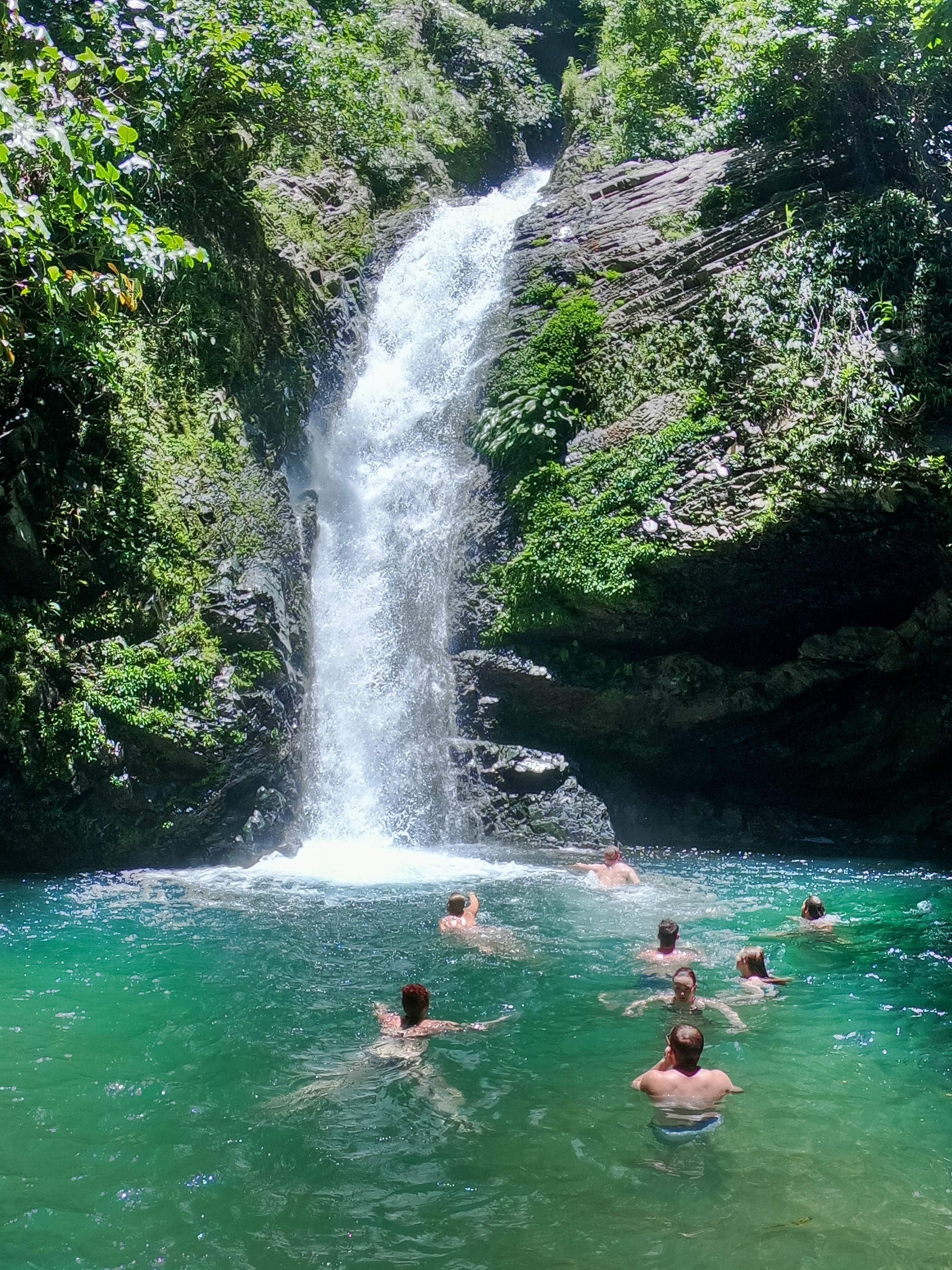
Waterfall, Philippines
Our Philippines Expertise

We know the Philippines beyond the obvious islands.

Routing That Actually Works

The Philippines is one of the most logistically complex destinations in Southeast Asia — domestic flights are frequent but need to be sequenced correctly, ferry connections depend on weather windows, and a poorly designed itinerary can spend a third of its time in transit. We design routes that move naturally and leave the right amount of time at each island.

The Right Island for the Right Person

Not everyone needs Siargao. Not everyone should spend three nights in Boracay. Not every diver wants to do the wrecks. We take the time to understand what you actually want from a Philippines trip and build the island combination around that — rather than defaulting to the same six-island circuit everyone recommends.

Weather-Aware Planning

The Philippines' typhoon season and regional weather patterns are something most travellers underestimate. We build every itinerary with an awareness of which islands are exposed during which months, which transfer routes are weather-dependent, and what the backup plan is if conditions change. We've been doing this long enough to have contingencies for most scenarios.

Always With You

Our team is available via WhatsApp throughout your entire trip. Ferry cancelled due to rough seas? Flight delayed? We sort it before it becomes a problem — wherever you are in the archipelago.

What Travellers Say

Philippines trips they'll talk about forever.

Curtis and Andreas took the time to learn about our objectives and used their decade of experience to make discerning recommendations. During a flight cancellation, Andreas had already researched alternatives and re-booked us before I could even read the email. It was such a relief to know we were not alone on the other side of the world.

Leah Rae · Southeast Asia, 2024

Being in our 40s, we do not travel the way 20-year-olds do. It was so great to be able to trust Free & Easy to look after all the details. No matter where we were, we were just a quick message away from any help. On a scale from one to ten, we give them fifteen!

Tammy & Robert Bell · 2026

Common Questions

Everything you need to know.

Fourteen days is the sweet spot for an itinerary that covers the Visayas and Palawan properly. With two weeks you can do Cebu, Siargao, Boracay, Puerto Princesa, El Nido, and Coron without any stop feeling rushed. Ten days is possible with tighter choices — usually dropping one island or shortening stays. We'd rather design a trip that goes deeper into fewer places than one that races through all six.
November through May is the reliable window — dry season across most of the country, calm seas for island transfers, and the El Nido lagoons at their clearest. January through April is peak season: outstanding conditions but busier on the popular islands, so book accommodation and island-hopping tours early. June through October is typhoon season, with July to September carrying the highest risk — we generally don't recommend travel during this period, particularly to Palawan and the Visayas.
It requires more planning than Thailand or Bali — the archipelago geography means domestic flights and ferries rather than road transfers, and connections between islands like El Nido and Coron involve either a ferry or a flight via Puerto Princesa. Done with the right routing it flows naturally; done poorly it can feel like you're spending the trip in transit. Getting the sequencing right is exactly what we do when we design a Philippines itinerary.
Not at all. The Philippines is just as rewarding for non-divers — the island-hopping and lagoon experiences in El Nido and Coron are primarily snorkelling-based and genuinely spectacular without going underwater. Siargao's lagoons, Boracay's beach, and the Underground River are all completely above the waterline. That said, the Philippines is a world-class diving destination and if you do dive — or want to learn — the opportunities here are exceptional.
Yes — unequivocally. El Nido has a well-earned reputation as one of the most beautiful places in Southeast Asia and it doesn't disappoint. The lagoons and limestone karsts are genuinely as dramatic as the photographs suggest. El Nido town has also matured considerably: there are now good restaurants, comfortable guesthouses, and enough of a night scene to enjoy the evenings without it feeling like a resort. The journey — usually a van transfer from Puerto Princesa — takes around five hours and is worth every kilometre.
The Philippines is excellent value at the budget and mid-range level — food, local guesthouses, and island-hopping tours are genuinely inexpensive. At the higher end, boutique resorts on Siargao and El Nido offer a level of comfort and setting that would cost significantly more in other regions. The main costs to plan for are domestic flights between islands, which add up across a multi-island itinerary. We don't work from a price list — we'd rather understand your trip first and design to your budget from there. Flexible payment plans are also available — just ask. For a full breakdown of day-to-day costs, see our Philippines Spending Money Guide.
The Philippines works well as a standalone trip — 14 days is enough to feel like you've genuinely experienced it. Combined itineraries are possible: Singapore is the most natural gateway and can be added easily at the beginning or end. A wider Southeast Asia trip combining the Philippines with Thailand, Bali, or Vietnam is a bigger undertaking but absolutely doable with the right design. We'll advise honestly on whether a combined trip gives each destination the time it deserves.

Let's Start Planning

Ready for your
Philippines trip?

Tell us which islands draw you, how long you have, and how you like to travel. We'll design the routing and take it from there.

Flexible payment plans available — just ask.

Fill Out the Form travel@fnez.com

More Destinations We Know Deeply