Hammock on the Caribbean beach, Colombia

Custom Trips Colombia

Custom Trips to Colombia

Colombia,
Your Way.

Tailor-made Colombia itineraries built around you — from the innovation and energy of Medellín and the extraordinary granite landscape of Guatapé, through the raw Caribbean coast of Palomino and Playa Costeño, to the colonial magnificence of Cartagena.

Mountains to CaribbeanOne Remarkable Route
12 DaysSweet Spot
All StylesBudget to Luxury
Overview Regions The Stops Who It's For Itinerary When to Go FAQ

Why Colombia

The country that changed faster than any other — and kept everything that made it extraordinary.

Colombia is one of the most remarkable travel stories of the past twenty years. Medellín — once defined by a violence that made it a byword for danger — has been transformed into one of the most inventive, culturally rich, and genuinely exciting cities in Latin America, winning more international urban innovation awards than almost anywhere else on earth. Cartagena's walled colonial city has always been extraordinary. The Caribbean coast between them — Palomino and Playa Costeño — offers a raw, unhurried beauty that the tourist economy has barely touched. And Guatapé, rising above one of the most unusual reservoir landscapes on the continent, is the stop that arrives as a revelation regardless of how many photographs you've seen of El Peñol.

We've been designing custom trips through Colombia long enough to know which neighbourhood in Medellín rewards a morning walk, where to eat bandeja paisa without the tourist premium, which stretch of Caribbean beach near Palomino sees almost no visitors, and how to experience Cartagena's old city in the early morning before the heat and the crowds arrive together.

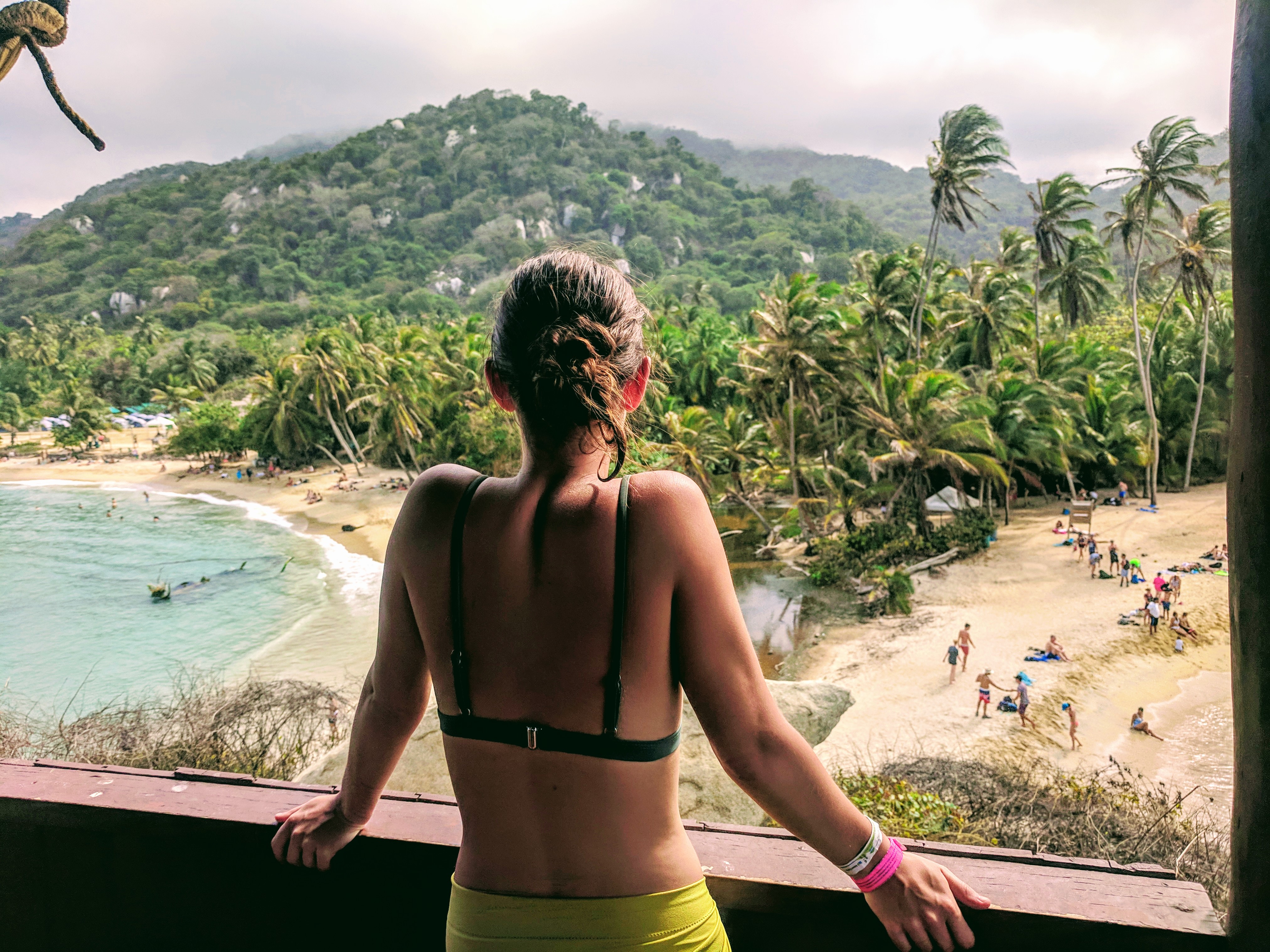
Viewpoint over the Caribbean coast and Sierra Nevada, Colombia
5 Stops Mountains to Caribbean

The Country

Three distinct worlds — the Andean city, the Caribbean coast, and everything in between.

Colombia is one of the most geographically and culturally diverse countries in South America — Andean highland cities, Caribbean coast towns with African and indigenous influences, dense jungle, and a coffee-growing interior that exists in a landscape of extraordinary beauty. This itinerary moves through three of its most compelling zones.

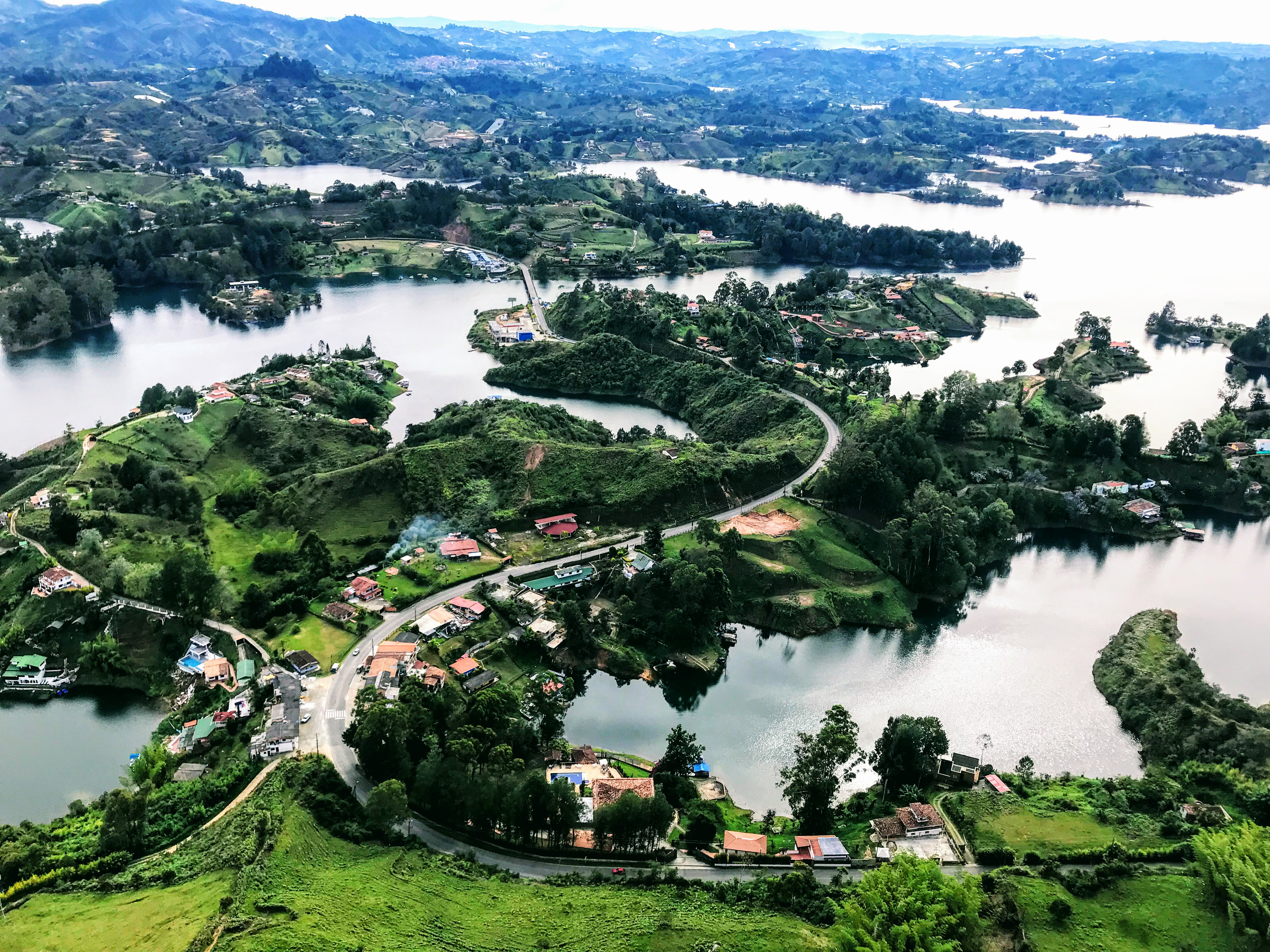
El Peñol and Guatapé reservoir, Colombia
Medellín & the Andes
Medellín sits at 1,495 metres in the Aburrá Valley and has a climate its residents call eternal spring — warm, clear, and never too hot. The city's transformation over the past two decades is genuinely extraordinary: the former epicentre of the cartel era is now a city of innovative architecture, world-class contemporary art, outdoor escalators connecting hillside comunas to the city centre, and a food scene that has grown to reflect its new confidence. Guatapé, an hour from the city, adds the other dimension — one of the most dramatic natural landscapes in Colombia, a reservoir world dominated by El Peñol, a granite monolith that rises 220 metres from the water and rewards the 740-step climb with a view that is genuinely difficult to describe.
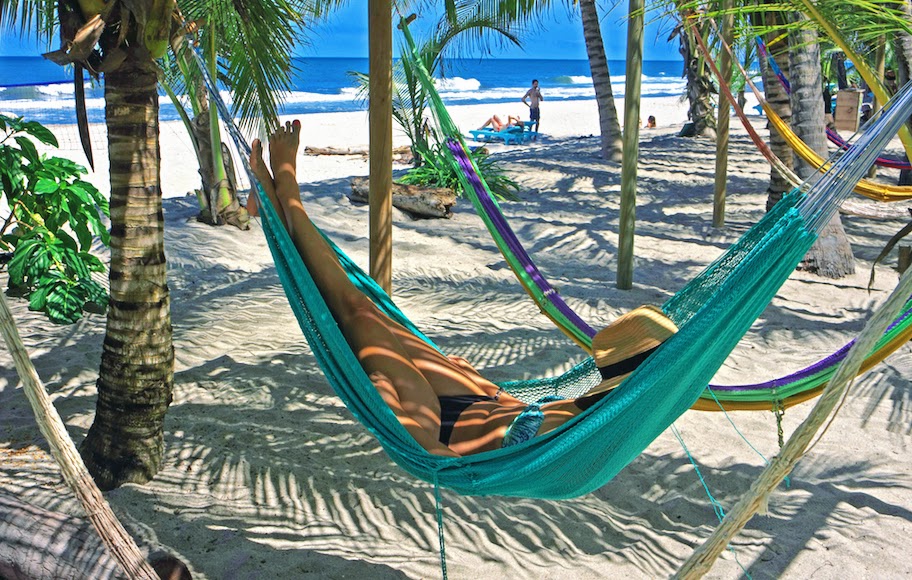
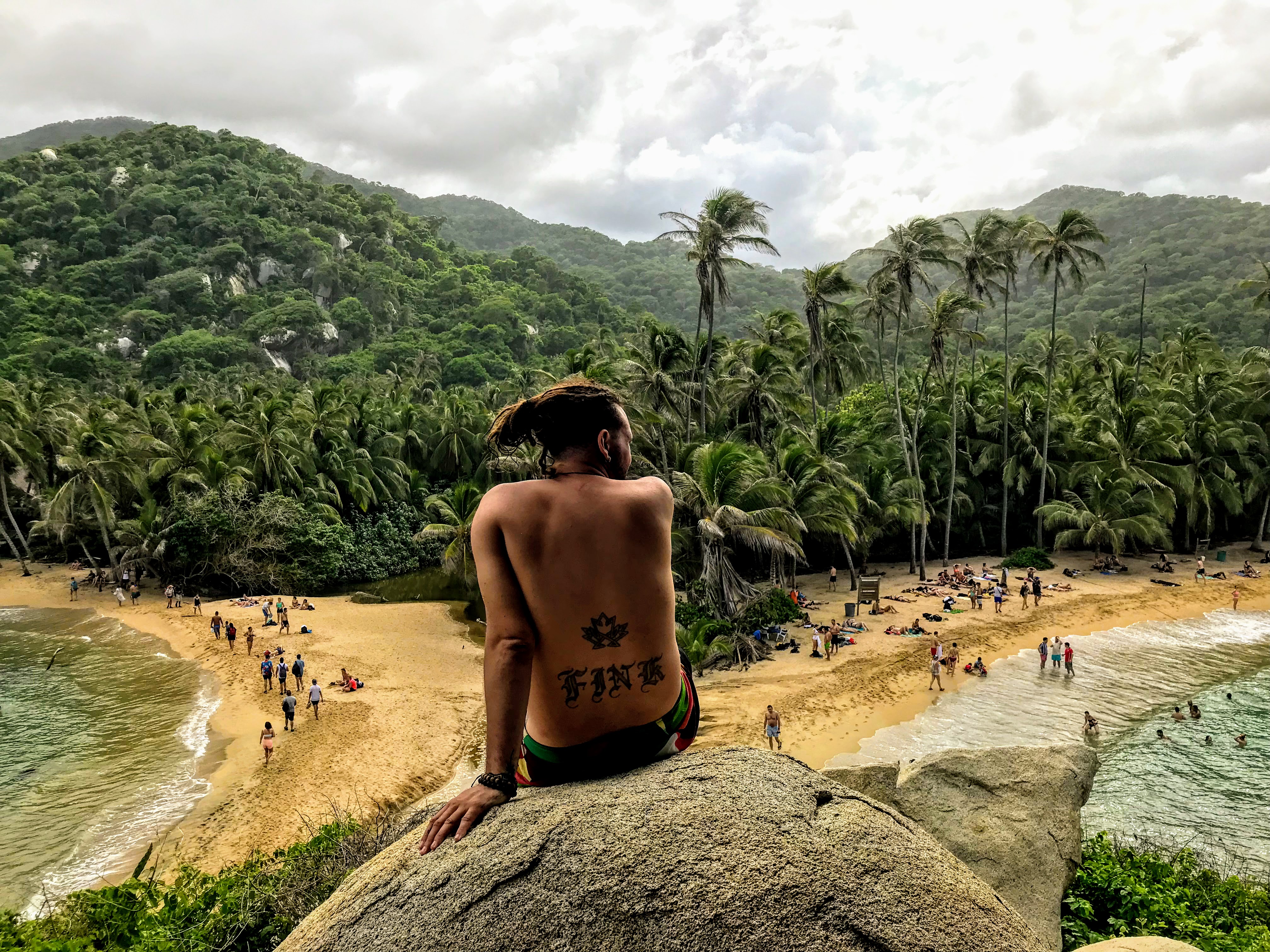
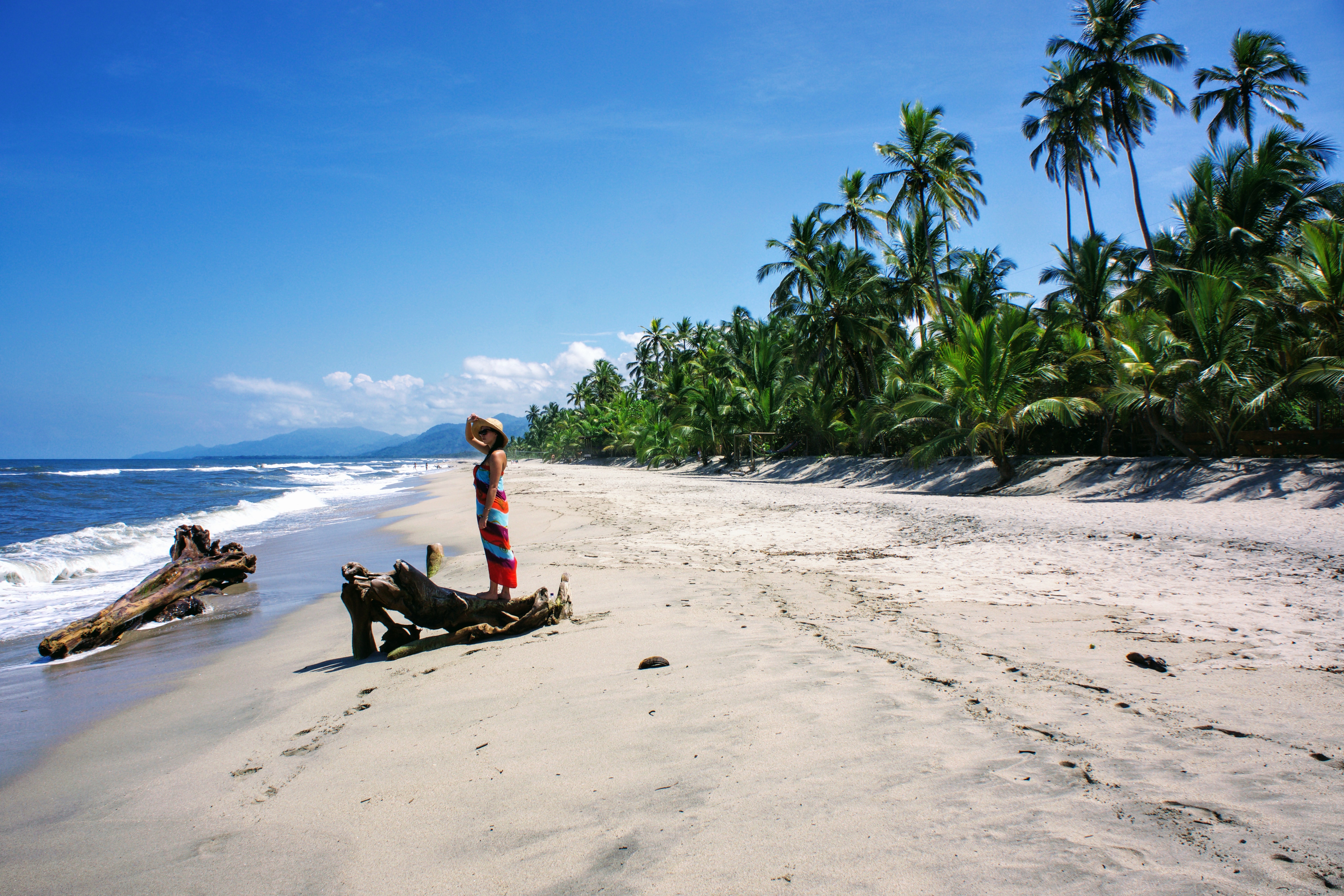
Costeño beach, Caribbean coast, Colombia
The Caribbean Coast
The stretch of Caribbean coast between the Sierra Nevada de Santa Marta and the sea is one of the least-developed and most beautiful in Colombia. Palomino sits where the river meets the Caribbean — a small town of hammock hostels, reggae, and fresh fruit, where the main activity is tubing down the Palomino River through jungle before it opens into the sea. Playa Costeño, a short distance along the coast, is an undeveloped stretch of Caribbean beach at the base of the Sierra Nevada — the mountains visible above the coconut palms, the water warm and clear, and the crowd almost entirely absent. This is the Caribbean coast that Cartagena was before the hotels arrived.
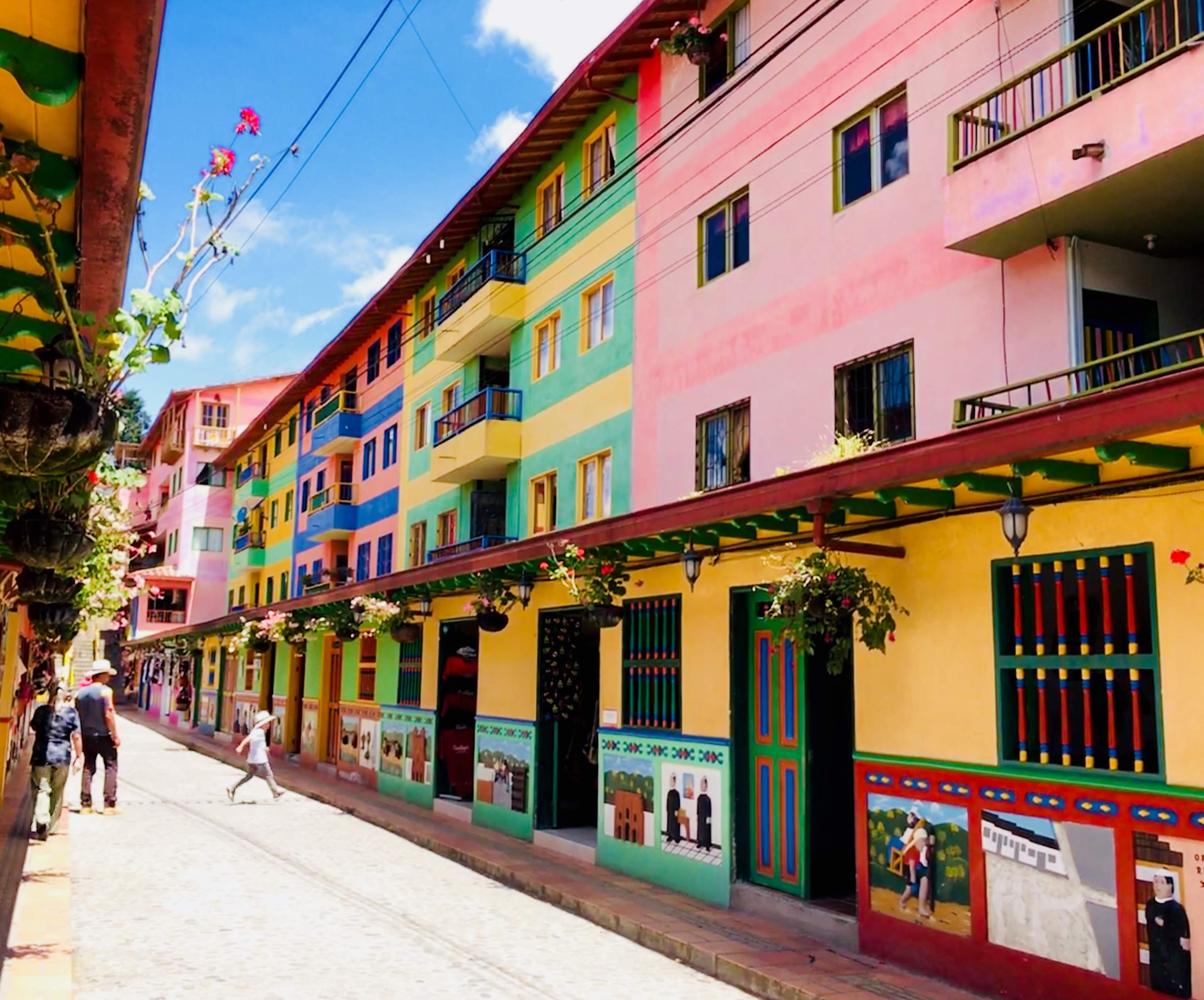
Colourful street, Cartagena, Colombia
Cartagena & the Walled City
Cartagena de Indias is one of the finest colonial cities in the Americas — a walled port city on the Caribbean coast where four centuries of Spanish colonial architecture has been maintained with extraordinary care, the streets are narrow enough to be shaded for most of the day, the bougainvillea cascades from every balcony, and the Caribbean evening light turns everything the colour of amber and rose. The old city within the walls — El Centro and Getsemaní — contains the finest concentration of colonial architecture in South America outside of Havana. Two nights gives you the old city at dawn, the Castillo San Felipe, and the Rosario Islands by boat.

The Stops

Five places, each doing something the others can't.

This itinerary moves from the Andes to the Caribbean — from Medellín's urban energy through the granite landscape of Guatapé, along the raw Caribbean coast, and into the colonial magnificence of Cartagena. Each stop is essential and distinct.

Medellín
Innovation · Street Art · Food · Eternal Spring Climate
Medellín is the stop that most people arrive at with preconceptions and leave evangelical about. The city's transformation from the most dangerous city on earth to one of the most innovative and culturally rich in Latin America is not a marketing story — it is visible in every neighbourhood, in the cable cars and outdoor escalators that connect the hillside comunas to the valley below, in the Museo de Antioquia's extraordinary collection, in the street art of the Laureles and El Poblado barrios, and in a restaurant scene that reflects the city's new confidence and prosperity. El Poblado is the neighbourhood most visitors stay in — leafy, safe, and full of excellent restaurants and rooftop bars. The Botanical Garden, the Metrocable to the hillside barrios, the Parque Explora, and the Sunday flower market in the central plaza are the essential experiences. Two nights is enough to feel the city's energy properly without exhausting it.
Guatapé
El Peñol · Reservoir · Zócalos · Sunrise Ascent
Guatapé is where Colombia's landscape reveals itself as something genuinely unusual. El Peñol — a single granite monolith rising 220 metres from a reservoir created in 1978 when the valley was flooded for a hydroelectric project — dominates a landscape of islands, peninsulas, and winding waterways that has no equivalent anywhere else in the country. The 740-step staircase built into a crack in the rock's face brings you to the summit in around thirty minutes; the view from the top — the reservoir extending in every direction, the Andes in the distance, the old town's rooftops below — is genuinely extraordinary and worth every step. The town of Guatapé itself is famous for its zócalos — painted decorative panels on the lower half of every building, depicting animals, scenes from daily life, and geometric patterns — giving the streets a vivid character unlike anywhere else in Colombia. One night in Guatapé allows you to climb El Peñol at dawn before the day-trippers from Medellín arrive, when the light is extraordinary and the summit is almost silent.
Palomino
River Tubing · Sierra Nevada · Caribbean · Hammocks & Jungle
Palomino sits at the base of the Sierra Nevada de Santa Marta — the world's highest coastal mountain range — where the Palomino River descends from the mountains through dense jungle and empties into the Caribbean Sea. The town itself is small, quiet, and genuinely unhurried: a main road, hammock restaurants, local fishing boats on the beach, and the mountains visible above the treeline in every direction. The essential activity is tubing the river — sitting in an inflatable ring on the current as it moves through jungle and opens into the sea, a journey of around ninety minutes that captures the particular magic of Palomino better than any description can. The beach at Palomino is Caribbean in the way that fewer and fewer Caribbean beaches still are — wide, wild, largely undeveloped, and backed by jungle rather than hotels. Three nights gives you enough time to slow down properly, which is what Palomino requires and rewards.
Playa Costeño
Undeveloped Caribbean · Sierra Nevada Views · Complete Quiet
Playa Costeño is the stop that the travellers who find it return for. A stretch of undeveloped Caribbean beach between Palomino and Tayrona National Park, it sits at the base of the Sierra Nevada with the mountains rising directly behind the coconut palms and the Caribbean spread out ahead — a visual combination that has no equivalent on this itinerary or, arguably, anywhere in Colombia. The handful of small ecolodges and beach camps that exist here are designed to leave as small a mark on the landscape as possible, and they succeed — the beach in the early morning is genuinely wild, the fishing boats of the local Indigenous communities pass along the coast, and the only sounds are the Caribbean surf and the forest above. Two nights is the right amount of time — enough to arrive, slow down completely, and leave with reluctance.
Cartagena
Walled Old City · Getsemaní · Rosario Islands · Colonial Architecture
Cartagena is where this itinerary ends — and it ends well. The walled city of Cartagena de Indias, a UNESCO World Heritage Site since 1984, is one of the finest colonial urban landscapes in the Americas: four centuries of Spanish architecture in a state of extraordinary preservation, its streets narrow enough to remain shaded through the hottest part of the day, its balconies draped in bougainvillea, its plazas animated by a mixture of residents, artists, and visitors who have been drawn here by the same combination of beauty, heat, and Caribbean light since the sixteenth century. El Centro, the historic core within the walls, contains the Cathedral, the Palace of the Inquisition, and the Gold Museum. Getsemaní, the neighbourhood just beyond the walls, has the best street art in the city and a genuine local character that the old town occasionally loses to its own popularity. The Castillo San Felipe de Barajas — the largest Spanish colonial fortress in the Americas — gives the best panoramic view of the city and the Caribbean. A morning boat to the Rosario Islands, a coral archipelago thirty minutes from the city harbour, provides the Caribbean water that the city itself can't offer. Two nights in Cartagena captures all of this at a pace that allows each of it to land properly.

Who It's For

Colombia works for city lovers, beach seekers, and the genuinely curious — when the route is designed well.

We've designed Colombia trips for couples on honeymoon, solo travellers, groups of friends, culture enthusiasts, adventure seekers, and people who want one of the most diverse travel experiences available in South America without the logistics of a multi-country itinerary. This route delivers all of it in twelve days.

Culture & City Lovers
Medellín is one of the most culturally interesting cities in Latin America right now — the Museo de Antioquia, the Fernando Botero Plaza, the Pablo Escobar tours that approach the city's history with intelligence and honesty, the street art of the comunas, and a food culture that has developed alongside the city's confidence. Cartagena adds the colonial dimension — four centuries of Spanish architecture, African influence in the music and the food, and an evening light that makes the old city feel like the best film set ever built, except it is entirely real.
Adventure & Nature
El Peñol at dawn before the day-trippers arrive. Tubing the Palomino River through jungle to the sea. Hiking to the beaches of Tayrona National Park from Playa Costeño. Paragliding above Medellín's valley with the city below and the Andes extending in every direction. Snorkelling the coral reefs of the Rosario Islands from Cartagena. Colombia has a physical energy that rewards those who want to move — and this itinerary is designed to let you do all of it without compromising the slower moments that make the trip feel genuinely restorative.
Couples & Honeymoons
Colombia has a romantic intensity that comes from its colour, its heat, and its landscapes. Watching the sunset from El Peñol's summit with the reservoir below. A hammock on the beach at Playa Costeño with the Sierra Nevada behind you and the Caribbean ahead. Dinner at a candlelit table in Cartagena's old city with the colonial architecture surrounding you and a cumbia band somewhere in the distance. Medellín's rooftop restaurants above the city lights of the valley. Every stop on this itinerary has a natural romance — Colombia rewards those who arrive willing to be surprised.
Food & Drink
Colombian food is one of the great undiscovered cuisines of Latin America — bandeja paisa (beans, rice, ground beef, chicharrón, plantain, chorizo, fried egg, and arepa on a single plate) in Medellín, fresh Caribbean fish and coconut rice along the coast, costeño cheese and tropical fruit at Palomino's market, and the extraordinary seafood of Cartagena's old city restaurants. Colombian coffee — some of the finest in the world — is available at its best in Medellín's specialty coffee shops. And aguardiente, the anise-flavoured national spirit, is best understood at a Cartagena bar after midnight when the heat has finally dropped.
Off the Beaten Path
Most Colombia itineraries go to Medellín and Cartagena and miss everything in between. Palomino and Playa Costeño are the differentiators on this itinerary — the Caribbean coast that sees a fraction of Cartagena's visitors and retains the character that the coast had before the tourist economy arrived. Guatapé, while increasingly visited from Medellín as a day trip, is transformed by an overnight stay into something genuinely discovery-level — the early morning ascent of El Peñol, the reservoir at golden hour, and the town's zócalos in the afternoon quiet are experiences that the day-trip buses entirely miss.
Solo Travellers
Colombia is one of the finest destinations in South America for solo travellers — Medellín in particular has a social energy and a network of excellent hotels, hostels, and co-working spaces that makes it genuinely easy to meet people and move through the city independently. The Caribbean coast towns of Palomino and Playa Costeño have a natural communal character — hammock restaurants, shared boat trips, evening bonfires — that makes solo travel feel social rather than solitary. Cartagena's old city rewards wandering without a fixed plan. We design solo itineraries with the right balance of structure and freedom.

Sample Itinerary

12 Days in Colombia — Medellín to Cartagena.

This itinerary moves from the Andes to the Caribbean — two nights in Medellín, one in Guatapé, three in Palomino, two at Playa Costeño, and two in Cartagena. Every itinerary we build is shaped around your pace and interests. This is a starting point.

1–2
Medellín
Two days in one of Latin America's most remarkable city transformations
Medellín arrives differently from how most cities arrive — with a weight of prior knowledge that the city then systematically dismantles. The cable cars and outdoor escalators that connect the hillside comunas to the valley floor are the visible emblem of the transformation, but the substance of it is in the streets themselves: the art, the architecture, the food, the people. El Poblado, where most visitors stay, is leafy and comfortable; the real Medellín is in the neighbourhoods beyond it — Laureles, Envigado, and the comunas where the escalators climb — and two days gives you enough to move between them with intention. The Museo de Antioquia contains the world's largest collection of Botero bronzes and paintings, displayed alongside extraordinary pre-Columbian and contemporary Colombian work. The Sunday flower market, the Botanical Garden, and the Parque Explora science museum round out the cultural programme. The food in Medellín is where Colombian cuisine is at its most confident: the bandeja paisa, the specialty coffee shops that have grown alongside the city's new economy, and a restaurant scene that draws the best chefs in the country.
El PobladoMetrocableMuseo de AntioquiaBandeja PaisaSpecialty Coffee
3
Guatapé
One night at El Peñol — the granite monolith that rises above an extraordinary reservoir landscape
Guatapé is an hour from Medellín and a completely different Colombia. El Peñol — a single granite inselberg rising 220 metres from a reservoir created when the Nare River valley was flooded in 1978 — dominates a landscape of extraordinary visual drama: islands and peninsulas in every direction, the Andes visible in the distance, and the old town of Guatapé below with its famous zócalos — decorative painted panels on the lower half of every building — giving the streets a vivid, joyful character unlike anywhere else in the country. The 740-step staircase built into a crack in El Peñol's face is the essential experience, and the essential time for it is dawn — before the day-trip buses from Medellín arrive, when the summit is silent and the light across the reservoir is extraordinary. One night in Guatapé gives you that early morning ascent, the afternoon on the water by boat or kayak, and the town's particular evening quiet when the day-trippers have gone and Guatapé reverts to being a genuine Colombian town rather than a day-trip destination.
El Peñol at Dawn740 StepsReservoir by BoatZócalos
4–6
Palomino
Three days on the raw Caribbean coast — river, jungle, and the mountains behind
Palomino sits where the Sierra Nevada de Santa Marta meets the Caribbean Sea — the world's highest coastal mountain range rising directly from the coast, its snow-capped peaks visible on clear mornings above the jungle and the beach. The town is small and genuinely unhurried: a main road, hammock restaurants, fishing boats on the wild beach, and the Palomino River running through jungle beside the town before emptying into the sea. The river tubing — sitting in an inflatable ring on the current as it moves through dense vegetation and opens suddenly into the Caribbean — is the defining Palomino experience, and it is best done without a fixed time, floating at the river's own pace for ninety minutes or two hours before swimming back through the surf. The beach at Palomino is Caribbean in the way that development eventually removes — wide, wild, backed by coconut palms and jungle rather than hotels, and extending in both directions to the horizon. Three nights gives you the river, the beach, enough time to visit the local Kogi community in the foothills if you choose, and the particular experience of slowing down in a place that actively encourages it.
River TubingWild Caribbean BeachSierra Nevada ViewsKogi Community
7–8
Playa Costeño
Two days at one of Colombia's most beautiful and least-visited Caribbean beaches
Playa Costeño is a short move along the coast from Palomino — a stretch of undeveloped Caribbean beach at the base of the Sierra Nevada where the mountains rise directly behind the coconut palms and the sea extends ahead without interruption. The handful of small ecolodges here are designed to leave as light a mark as possible on the landscape, and the result is a beach that feels genuinely wild — fishing boats from the local Indigenous communities along the coast, the Sierra Nevada visible above the treeline, and the Caribbean in every direction. The water here, sheltered by the curve of the coastline, is calmer than Palomino's open beach and excellent for swimming. Tayrona National Park — one of Colombia's most celebrated natural areas, where the jungle meets the Caribbean across a series of protected beaches — is accessible from Playa Costeño and worth a morning's excursion for those who want to see the park's interior. Two nights here arrives as pure decompression after the social energy of Medellín and the movement of the Guatapé day — a place to read, swim, and prepare for Cartagena.
Wild Caribbean BeachSierra Nevada BackdropTayrona AccessEcolodge
9–10
Cartagena
Two days in one of the finest colonial cities in the Americas
Cartagena de Indias is where this itinerary ends and where it becomes very difficult to leave. The walled old city — a UNESCO World Heritage Site — is four centuries of Spanish colonial architecture in a state of extraordinary care: streets narrow enough to be shaded through the hottest part of the day, balconies draped in bougainvillea, plazas animated by the particular mixture of residents, artists, and visitors that gives the old city its layered character. El Centro contains the Cathedral Basílica de Cartagena, the Palace of the Inquisition, and the Gold Museum; Getsemaní, just beyond the walls, is where the city's best street art and most genuine neighbourhood life exists — and where the barrio's transformation from the city's poorest neighbourhood to one of its most creative is still visible in the tension between old and new. The Castillo San Felipe de Barajas, the largest Spanish colonial fortress in the Americas, gives the finest panoramic view of the city and the Caribbean coast beyond it. A morning boat to the Rosario Islands — a coral archipelago thirty minutes from the city harbour — provides the clear Caribbean water and the snorkelling that the old city's heat makes you want. Two nights in Cartagena, arriving from the raw Caribbean coast, gives the old city an extra dimension — the contrast between the wild beach and the cultivated colonial grandeur makes both feel more vivid.
Walled Old CityGetsemaní Street ArtCastillo San FelipeRosario IslandsCartagena Seafood

Colombia rewards those who build in time for the unexpected — the conversation that turns into a long afternoon, the beach that turns out to be better than the famous one, the neighbourhood in Medellín that wasn't in any guidebook. The itinerary we build is a structure, not a schedule. Logistics — transfers, activities, accommodation — are handled entirely by us. You travel, we take care of the rest.

When to Visit

Colombia's dry season is the sweet spot — December to March for the full itinerary.

Colombia's climate varies by region and altitude. Medellín's highland climate is genuinely mild year-round. The Caribbean coast — Palomino, Playa Costeño, and Cartagena — follows a distinct pattern with a dry season from December to April that is the optimal window for the full itinerary.

Jan
Peak
Feb
Peak
Mar
Peak
Apr
Good
May
Wet
Jun
Good
Jul
Peak
Aug
Peak
Sep
Wet
Oct
Wet
Nov
Good
Dec
Peak
Peak — dry season, best conditions
Good — manageable conditions
Wet season — heavier rains on the coast
Dec – Mar: The Best Window
The dry season on the Caribbean coast coincides with Colombia's most festive period — Cartagena's New Year celebrations are extraordinary, the coast is at its most beautiful, and the Palomino beach and river are at their most accessible. Medellín is pleasant year-round but also at its most social in December and January. This is the window we recommend for a first visit to Colombia covering the full Medellín-to-Cartagena route.
Jul – Aug: The Second Dry Window
Colombia has a second dry period in July and August that is the best alternative to the December–March window. The Caribbean coast is dry, Medellín is in the middle of the year's best weather, and the crowds of the December holiday season are absent. Cartagena in July and August is busy with domestic Colombian tourism — lively and social in a different way from the international tourist season. July and August are our second recommendation for the full itinerary.
Medellín: Year-Round
Medellín's altitude gives it a climate that is genuinely mild at all times of year — the "City of Eternal Spring" description is not marketing hyperbole. Even in the rainy season (April–May and September–October), Medellín's rains are typically afternoon showers that clear by evening rather than the all-day rains that affect lower-altitude destinations. For those travelling primarily for Medellín and adding the Caribbean coast as a secondary objective, any month of the year is workable.
Tayrona National Park, Colombia
Our Colombia Expertise

We know Colombia beyond the obvious stops.

Palomino & Playa Costeño Over Cartagena Beaches

Most Colombia itineraries go straight to Cartagena and spend time on the day-trip beaches accessible from the city. Palomino and Playa Costeño are what the Caribbean coast looked like before the hotel economy arrived — wild, unhurried, and genuinely beautiful in a way that the more developed coast no longer is. Five nights on this stretch of coast gives Colombia's Caribbean section the depth that two nights in Cartagena alone can't provide.

Guatapé Overnight — Not a Day Trip

Every tour operator in Medellín runs a Guatapé day trip. We build in the overnight specifically because the early morning ascent of El Peñol — before the buses arrive and in the extraordinary light of a Colombian sunrise — is a fundamentally different experience from climbing the same rock at 11am surrounded by day-trippers. The extra night also gives you the reservoir by boat in the afternoon and the town's evening quiet, which the day trips never see.

Cartagena at the Right Pace

Two nights in Cartagena is enough when you arrive with local knowledge — knowing which restaurants in the old city are genuinely excellent, which morning the Rosario Islands boat is least crowded, and how to move through Getsemaní without a guide but with enough context to understand what you're looking at. We provide all of this as part of every trip we design.

Always With You

Our team is available via WhatsApp throughout your entire trip. Flight delayed into Medellín? Something changed in Palomino? Need a restaurant recommendation in Cartagena at 9pm? We sort it — wherever you are in Colombia.

What Travellers Say

Colombia trips they'll talk about forever.

Every single detail was taken care of, which made travelling feel effortless and stress-free. From accommodations to activities, everything was well thought out and perfectly suited to what I was looking for. That level of attention and care made a huge difference.

Laura Shandro · 2026

We have used their services on 4 different vacations. I would have to rate all of the trips 10/10 or higher. Even when there are unforeseen travel glitches — delayed flights, ferries — they are always on it before we even realise an issue. Highly recommend.

Rob Bell · 2025

Common Questions

Everything you need to know.

Twelve days is the sweet spot for covering Medellín, Guatapé, Palomino, Playa Costeño, and Cartagena without anything feeling rushed. Two nights in Medellín, one in Guatapé, three in Palomino, two at Playa Costeño, and two in Cartagena gives each stop the time it deserves while moving through the full range of what Colombia offers — the city, the mountains, the raw Caribbean coast, and the colonial port.
Colombia has changed dramatically over the past two decades. Medellín — once considered one of the world's most dangerous cities — is now a thriving, innovative metropolis that regularly tops lists of the most exciting cities in Latin America. Cartagena's walled city is one of the safest and most visited colonial cities in South America. The Caribbean coast around Palomino and Playa Costeño is relaxed and welcoming. As with any destination, awareness and sensible choices matter — which is exactly what a well-designed custom itinerary provides.
Palomino and Playa Costeño represent a completely different Caribbean Colombia from Cartagena — raw, unhurried, and genuinely local in character. Palomino is where the river meets the Caribbean at the base of the Sierra Nevada, with a tubing tradition down the river through jungle that is one of the more unusual and enjoyable activities on this itinerary. Playa Costeño is even quieter — an undeveloped stretch of Caribbean beach that sees a fraction of Cartagena's visitors and retains the character that the coast had before the tourist economy arrived. Together they give the Caribbean section of this trip a depth that starting directly in Cartagena would miss.
Absolutely — and the overnight stay is what makes the difference. El Peñol is best experienced at dawn before the day-trippers from Medellín arrive. One night in Guatapé gives you the early morning ascent in near-silence, the reservoir by boat or kayak in the afternoon, and the town's famous zócalos in the evening quiet — a completely different Guatapé from the one the day-trip buses see.
December to March is the dry season on the Caribbean coast and the best window for the full itinerary. July and August offer a second dry period that is an excellent alternative. Medellín's highland climate is genuinely mild year-round and can be visited at any time. We recommend December to March for a first visit covering the complete Medellín-to-Cartagena route.
Very naturally. Colombia connects well with Ecuador and Peru for a broader South America itinerary — the coffee region (Eje Cafetero) between Medellín and Bogotá is an extraordinary addition for longer trips. To the north, Panama and Costa Rica, Peru, and Nicaragua complete a Central and South America journey. We design multi-country itineraries regularly and Colombia is one of the finest entry points for South America. For a full breakdown of day-to-day costs in Colombia, see our Colombia Spending Money Guide.

Let's Start Planning

Ready for your
Colombia trip?

Tell us which parts of Colombia draw you, how long you have, and how you like to travel. We'll design the rest — mountains, Caribbean coast, and all.

Flexible payment plans available — just ask.

Fill Out the Form travel@fnez.com

More Destinations We Know Deeply

Don't see the destination you're after? We design trips to far more countries than we have pages for — reach out and tell us where you want to go.