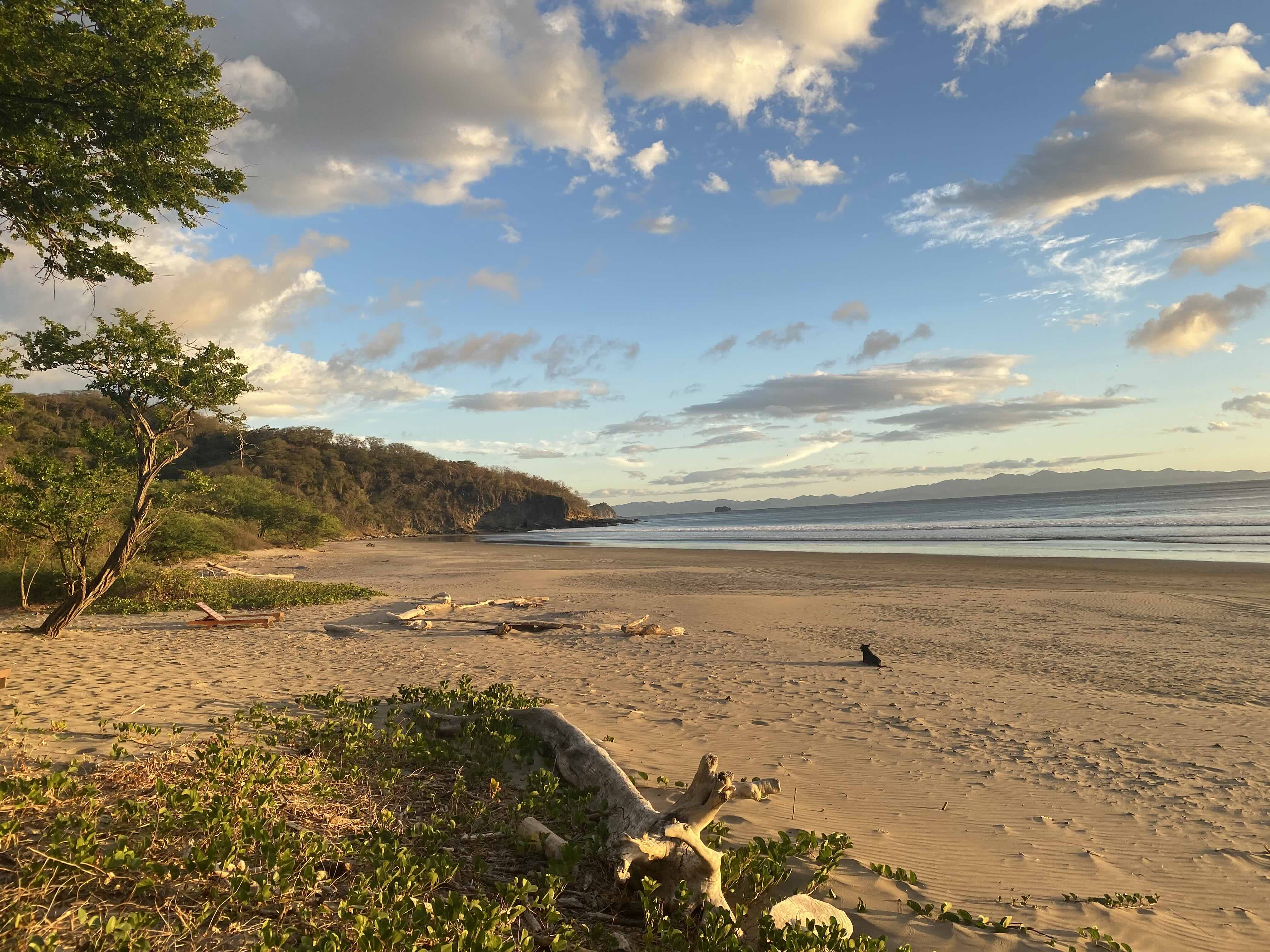
Playa Escameca, Nicaragua — beach and jungle view

Custom Trips Nicaragua

Custom Trips to Nicaragua

Nicaragua,
Your Way.

Tailor-made Nicaragua itineraries built around you — from the surf breaks and beach bars of San Juan del Sur and the volcanic drama of Ometepe, through the glassy crater lake of Laguna de Apoyo, to the turquoise Caribbean waters of the Corn Islands.
Pacific to CaribbeanOne Remarkable Route
12 DaysSweet Spot
All StylesBudget to Boutique
Overview Regions The Stops Who It's For Itinerary When to Go FAQ

Why Nicaragua

Central America's most underrated country — and one of its most rewarding.

Nicaragua has spent years in the shadow of its more famous neighbours and is quietly remarkable for it. The crowds are thinner, the prices are lower, and the country's particular character — volcanic, wild, warm — is unlike anywhere else in the region. A well-designed Nicaragua itinerary moves through extraordinary contrasts: the surf culture and Pacific sunsets of San Juan del Sur, the hidden black sand beach of Playa Escameca, the volcanic island drama of Ometepe rising from Lake Nicaragua, the glassy serenity of Laguna de Apoyo, and finally the turquoise Caribbean waters of the Corn Islands — a world completely different from the Pacific side.

We've been designing custom trips across Central America for years — long enough to know which surf break in San Juan del Sur suits beginners, which panga captain to trust for the crossing to Little Corn, and which hillside finca on Ometepe has the best view of both volcanoes at sunrise.

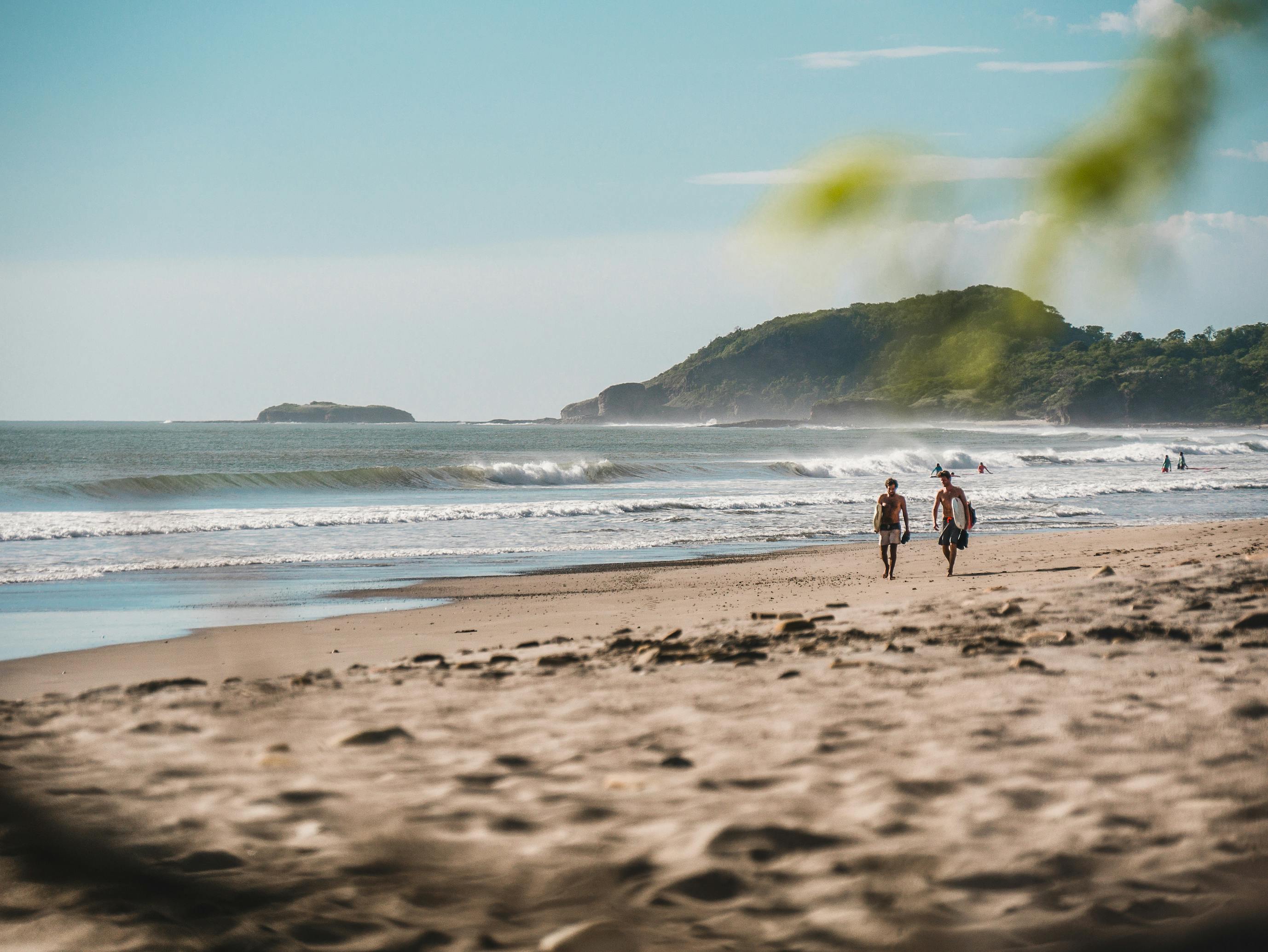
Surfers on the beach, San Juan del Sur, Nicaragua
5 Stops Pacific to Caribbean

The Country

Three distinct worlds — Pacific coast, volcanic lake region, and Caribbean islands.

Nicaragua's geography is one of its greatest assets. The Pacific coast and the lake region feel like one country; the Corn Islands feel like another entirely. Moving through all three gives a trip real depth and genuine variety.

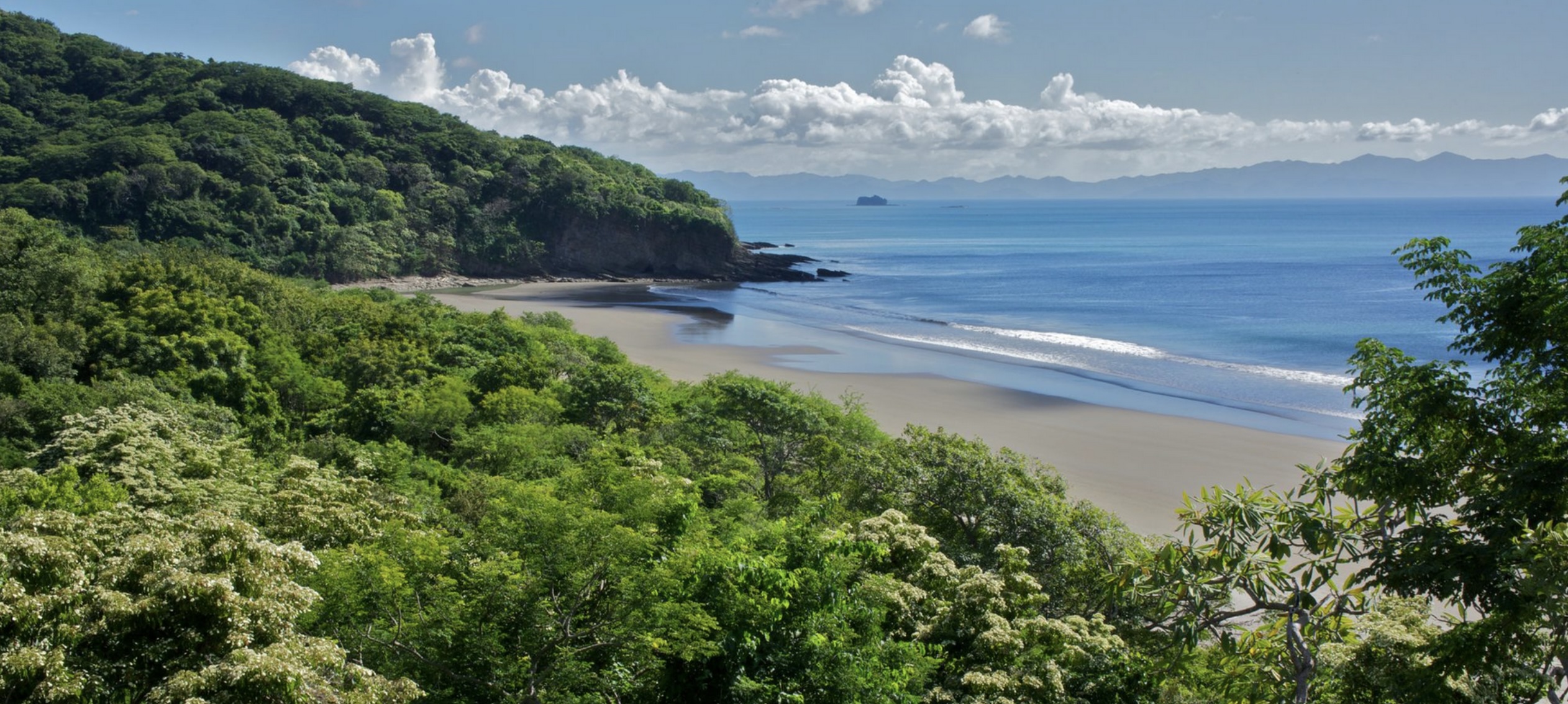
Playa Escameca, Pacific Coast, Nicaragua
The Pacific Coast
San Juan del Sur and Playa Escameca sit on Nicaragua's Pacific coast — a stretch of dramatic headlands, surf beaches, and fishing villages that has developed a character entirely its own. San Juan del Sur is the social hub: a horseshoe bay with surf schools, beach bars, and a restaurant scene that punches well above its size. Playa Escameca, a short drive north, is almost the opposite — a black sand beach backed by jungle, largely undiscovered, and extraordinarily beautiful at any time of day.
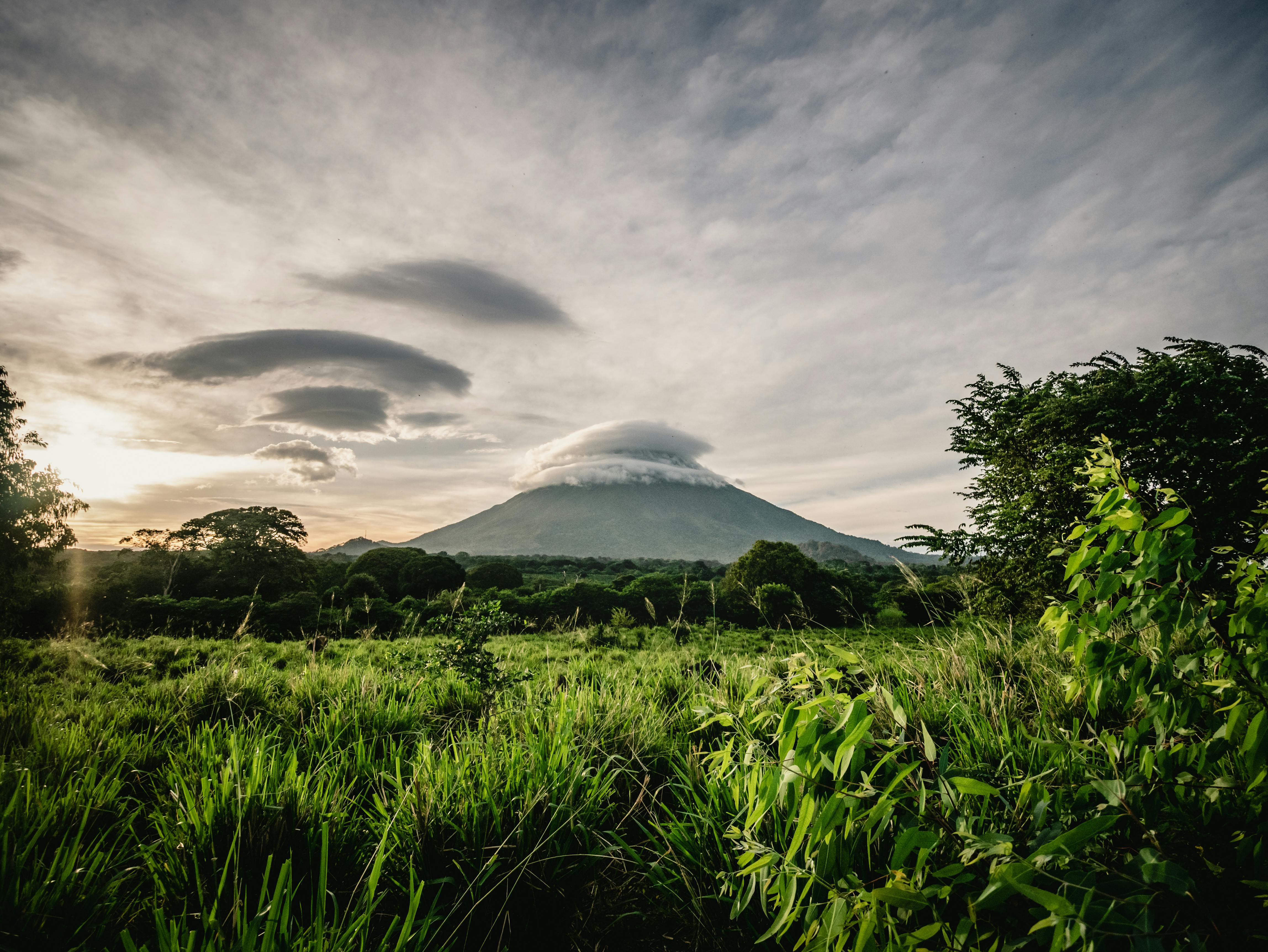
Volcán Concepción, Ometepe, Nicaragua
The Lake Region — Ometepe & Laguna de Apoyo
Lake Nicaragua is the largest lake in Central America and Ometepe — a volcanic island formed by two volcanoes — is one of its most extraordinary features. The island has its own ecosystem, its own pace, and its own particular beauty: lush jungle, ancient petroglyphs, natural springs, and views across the lake that change completely between dawn and dusk. Laguna de Apoyo, a volcanic crater lake southwest of Granada, is one of the most serene places in the country — the water warm and impossibly clear, the surrounding forest alive with birds and monkeys.
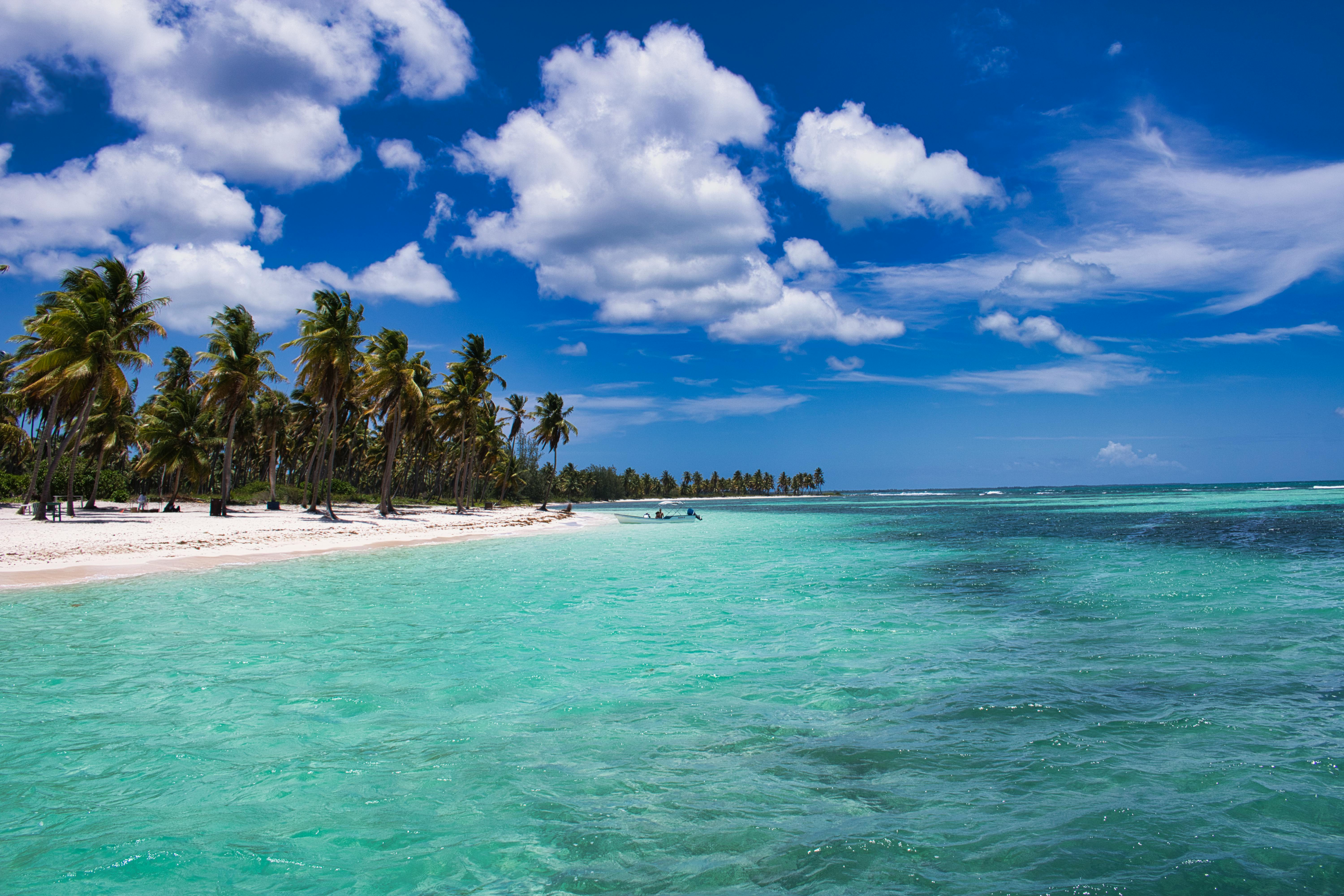
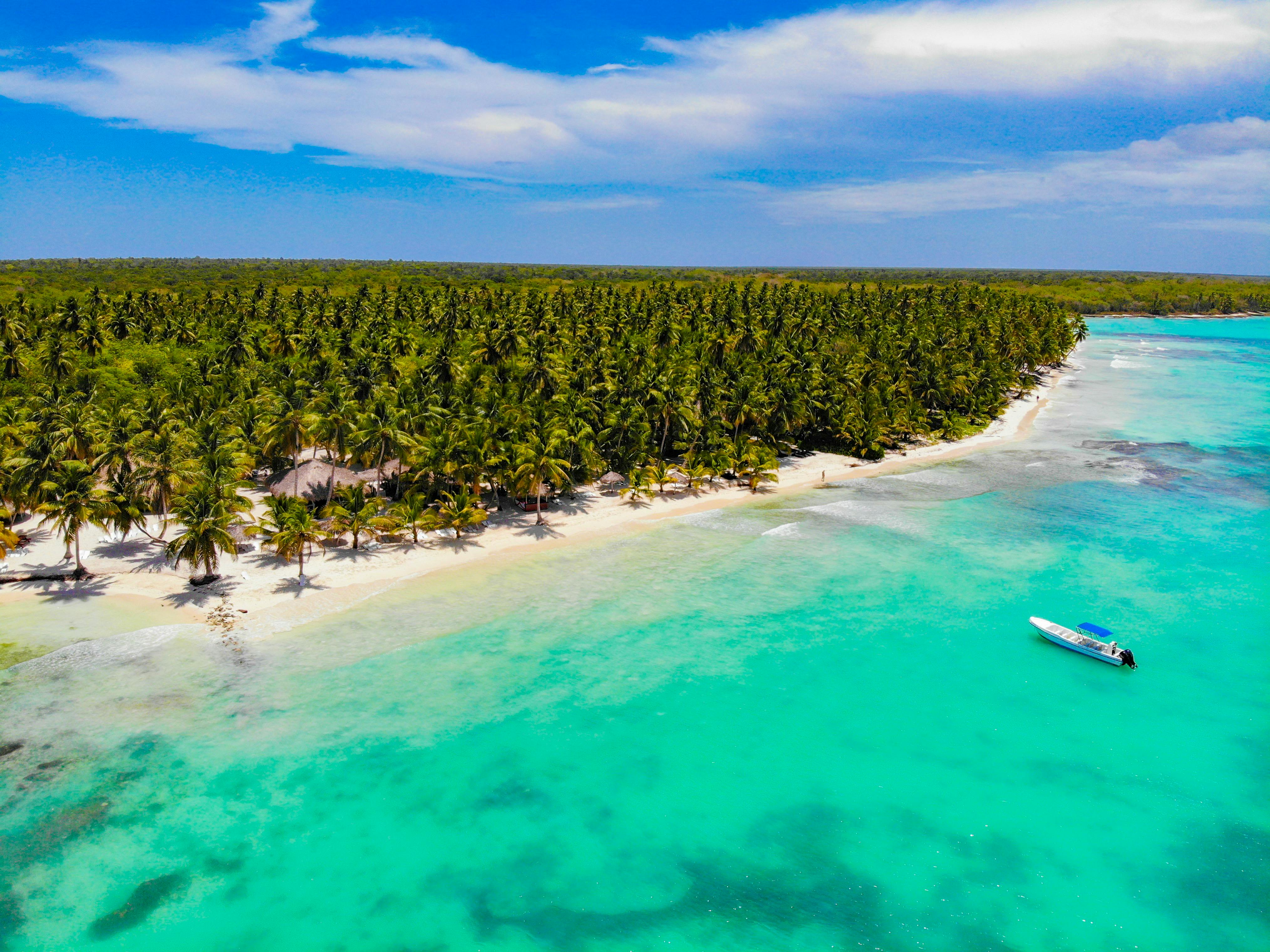
Corn Islands, Caribbean, Nicaragua
The Caribbean — Corn Islands
The Corn Islands sit in the Caribbean Sea off Nicaragua's Atlantic coast and have a character completely removed from the Pacific side — Creole culture, coconut palms, turquoise water, and a reef that supports some of the best snorkelling and diving in the region. Big Corn Island has the infrastructure; Little Corn Island, reached by a short panga crossing, is car-free, beautifully undeveloped, and the kind of place that makes leaving genuinely difficult. Four nights gives you both properly.

The Stops

Five places, each doing something the others can't.

This itinerary moves from the Pacific coast through the volcanic lake region and across to the Caribbean — a route that captures Nicaragua's full range in twelve days without anything feeling rushed.

San Juan del Sur
Pacific Coast · Surf · Sunsets
San Juan del Sur is Nicaragua's most established beach town — a horseshoe bay backed by hills, with a character that sits comfortably between surf town and genuine community. The bay itself is calm enough for swimming and beautiful at sunset; the surf breaks are a short drive north and south, with consistent waves that work for beginners and experienced surfers alike. The restaurant scene along the waterfront has developed significantly in recent years — fresh seafood, cold Victoria beer, and a social atmosphere that makes it easy to stay longer than planned. The Christ of the Mercy statue on the headland above town offers one of the finest panoramic views on the Pacific coast and is worth the climb at dawn or dusk.
Playa Escameca
Hidden Beach · Black Sand · Jungle
Playa Escameca is the part of a Nicaragua trip that most itineraries miss. A black sand beach backed by dense jungle, largely undiscovered, and strikingly beautiful — the dark sand against the Pacific waves and the surrounding green creates a visual drama that the more developed beaches around San Juan del Sur don't have. It's a place to slow down completely: swimming, walking the shoreline, watching the pelicans work the surf line, and eating whatever was caught that morning. Two nights here resets something that San Juan del Sur's energy occasionally disturbs.
Ometepe
Volcanic Island · Lake Nicaragua · Volcanoes
Ometepe is one of the most remarkable places in Central America. The island — formed by two volcanoes, Concepción and Maderas, connected by a narrow isthmus — rises dramatically from Lake Nicaragua and has its own ecosystem, its own pace, and its own particular atmosphere. Howler monkeys in the forest at dawn. Ancient pre-Columbian petroglyphs carved into boulders along the lake shore. Natural springs fed by the volcanic geology. And the volcanoes themselves — Concepción is an active stratovolcano and one of the more demanding hikes in the region; Maderas is gentler and has a crater lake at its summit. Two nights on Ometepe gives you the island properly — the ferry crossing from the mainland, the island circuit by tuk-tuk or motorbike, and enough time to feel its particular rhythm rather than simply passing through.
Laguna de Apoyo
Crater Lake · Swimming · Birding
Laguna de Apoyo is one of Nicaragua's most serene places — a volcanic crater lake southwest of Granada, its water warm, extraordinarily clear, and remarkably blue. The crater rim is covered in dense tropical forest and the lake sits quietly below, accessible by a winding road that descends steeply from the rim. The shore has a handful of small lodges and guesthouses with docks extending into the water — the morning routine of swimming off the dock before the heat arrives is one of those simple pleasures that defines a particular kind of travel. Kayaking, snorkelling, and birdwatching from the shore fill the days easily. Two nights here is the right amount — long enough to feel genuinely rested, short enough that leaving doesn't feel impossible.
Corn Islands
Caribbean · Snorkelling · Little Corn
The Corn Islands are the destination that rewards the journey. A short flight from the Pacific side deposits you into an entirely different Nicaragua — Creole culture, Caribbean rhythms, lobster grilled on open fires, and water of a blue that the Pacific coast simply doesn't have. Big Corn Island has the airport, the infrastructure, and Brig Bay beach — a long stretch of white sand with calm water and good snorkelling on the reef just offshore. Little Corn Island, reached by panga boat through open sea, is car-free, beautifully undeveloped, and the kind of place that operates entirely at its own pace. The diving and snorkelling on the reef around Little Corn is outstanding. The evenings on either island — lobster, cold beer, no particular schedule — are a genuinely good way to end twelve days in Nicaragua.

Who It's For

Nicaragua works for adventurers, beach lovers, and families — when the route is designed well.

We've designed Nicaragua trips for couples, families with children, solo travellers, surf enthusiasts, and people looking for the Caribbean without the crowds of the more developed islands. The Pacific-to-Caribbean route works for a wide range of travel styles — the key is the pacing.

Adventure Seekers
Nicaragua rewards those who want to do things rather than just see them. Surfing the Pacific breaks around San Juan del Sur. Hiking the volcanoes on Ometepe — Concepción for the serious climb, Maderas for the crater lake at the top. Kayaking across Laguna de Apoyo in the early morning. Snorkelling the reef around Little Corn Island. Crossing from Big Corn to Little Corn on a panga through open sea. The country has a natural physicality that makes it particularly well suited to active travellers who want the adventure built into the itinerary rather than added as an afterthought.
Beach & Ocean Lovers
Nicaragua offers two completely different ocean experiences on one itinerary. The Pacific coast — dramatic headlands, surf breaks, black sand beaches, and powerful waves — has a raw Atlantic energy. The Caribbean Corn Islands — calm turquoise water, white sand, fringing reef — are a completely different proposition. Both are excellent; together on a single trip they offer a range that very few destinations can match. Playa Escameca in particular — the hidden black sand beach between San Juan del Sur and the lake region — is one of the finest stretches of undeveloped Pacific coast in Central America.
Couples & Honeymoons
Nicaragua has a natural romance that comes from its wildness and its relative undiscovery. Watching the sun set over the Pacific from the Cristo statue above San Juan del Sur. A private dock on Laguna de Apoyo at dawn. The crossing to Little Corn Island and the particular feeling of arriving somewhere that feels genuinely remote. A candlelit dinner of fresh lobster on the Caribbean shore. The country rewards couples who want experiences rather than amenities — intimacy that comes from the place rather than from the hotel. We know which properties create that feeling genuinely.
Families with Children
Nicaragua is an exceptional family destination when the itinerary is designed around it. Ometepe captivates children — the volcano, the howler monkeys in the trees, the ancient petroglyphs, the freedom of exploring an island by tuk-tuk. Laguna de Apoyo's calm warm water is ideal for young swimmers. The Corn Islands offer shallow reef snorkelling that works well for children who have never done it before, and the car-free environment of Little Corn Island gives families a rare kind of freedom. We design family Nicaragua itineraries with pace in mind — enough to explore, enough time to simply be.
Off the Beaten Path
Nicaragua remains one of Central America's least visited destinations by international standards — which is, depending on your perspective, either a reason to go or a reason it isn't on more people's lists. Playa Escameca barely appears on most itineraries. Laguna de Apoyo is still largely the preserve of those who know to look for it. Little Corn Island operates entirely outside the mainstream tourist circuit. For travellers who have done the more obvious destinations and want somewhere that still has that quality of genuine discovery, Nicaragua consistently delivers.
Budget-Conscious Travellers
Nicaragua is one of the most affordable destinations in the Americas — accommodation, food, transport, and activities are all significantly cheaper than Costa Rica, and the quality-to-cost ratio across all budget levels is genuinely excellent. A beautifully located lodge on Ometepe costs a fraction of a comparable property in more developed destinations. Fresh lobster on the Corn Islands costs less than a pasta dish in most North American cities. A custom trip to Nicaragua is more accessible than most people expect — we design trips across the full range from comfortable to boutique.

Sample Itinerary

12 Days in Nicaragua — Pacific Coast to the Corn Islands.

This itinerary moves from the Pacific coast through Nicaragua's volcanic lake region and across to the Caribbean — two nights each in San Juan del Sur, Playa Escameca, Ometepe, and Laguna de Apoyo, then four nights on the Corn Islands. Every itinerary we build is shaped around your pace and interests. This is a starting point.

1–2
San Juan del Sur
Two days on the Pacific — surf, sunsets, and the horseshoe bay
San Juan del Sur is a natural first stop — a town with enough energy to feel alive and enough character to feel genuinely Nicaraguan. The bay itself is the centrepiece: a perfect horseshoe of calm water backed by hills, with fishing boats anchored offshore and the waterfront restaurants lining the shore. Walking the bay, eating fresh ceviche from one of the market stalls, and finding a table at one of the waterfront restaurants for sunset are the natural rhythms of the place. The surf breaks north and south of town are accessible by shuttle and suitable for all levels, with instruction available for those who haven't surfed before. The Cristo de la Misericordia — a large Christ figure on the headland above the bay — is the finest viewpoint in town and worth the thirty-minute hike up for the panoramic view across the Pacific and the surrounding hills. Two days in San Juan del Sur leaves you oriented in Nicaragua and ready to head to the quieter coast.
Horseshoe BaySurfingCristo StatueFresh SeafoodPacific Sunsets
3–4
Playa Escameca
Two days on a hidden black sand beach — the part most itineraries miss
Playa Escameca is a short drive north of San Juan del Sur and a world away from it in character. A long stretch of black volcanic sand, backed by dense jungle, with almost no development and almost no one on it. The Pacific here is powerful — more dramatic than calm, better for walking and watching than swimming in most conditions — and the surrounding landscape has a raw beauty that feels genuinely undiscovered. The days here have a simple structure: morning walks along the beach before the heat arrives, afternoons in a hammock or exploring the headlands on foot, evenings watching the Pacific turn orange and then dark. The accommodation options are small and characterful — lodges that have been here long enough to know the beach and the tides and the best time to walk to the southern point. Two nights at Escameca is the right amount of time to feel genuinely rested before the lake region begins.
Black Sand BeachJungle BackdropPacific CoastUndiscoveredHammock Days
5–6
Ometepe
Two days on the volcanic island — one of Central America's most remarkable places
Ometepe arrives as a completely different Nicaragua — the island rises from Lake Nicaragua as two volcanoes — Concepción, still active and perfectly conical, and Maderas, older and forested to the summit — connected by a narrow strip of land. The island rises from Lake Nicaragua as two volcanoes — Concepción, still active and perfectly conical, and Maderas, older and forested to the summit — connected by a narrow strip of land. The island has its own ecosystem: howler monkeys in the trees at dawn, white-faced capuchins along the forest trails, an extraordinary variety of bird life in the wetlands near the isthmus. The island circuit — by tuk-tuk or hired motorbike, stopping at the natural spring pools fed by the volcanic geology, the ancient pre-Columbian petroglyphs carved into boulders at the lake's edge, and the lookout points that offer views across the lake to the Nicaraguan mainland — is the natural way to orient yourself on arrival. The volcanoes are the other essential: Concepción for experienced hikers who want the full summit ascent; Maderas for those who want the forest trail, the howler monkeys, and the crater lake at the top without the exposed scramble. Both are rewarding, both require a full day, and both are worth doing. Two nights on Ometepe gives you the island properly — enough time to feel its particular rhythm rather than simply passing through.
Volcán ConcepciónVolcán MaderasHowler MonkeysPetroglyphsNatural Springs
7–8
Laguna de Apoyo
Two days at Nicaragua's most serene crater lake
Laguna de Apoyo is the part of a Nicaragua trip that people consistently describe as their favourite — and it's the part that's hardest to explain before you arrive. A volcanic crater lake, southwest of the colonial city of Granada, its water warm and extraordinarily clear, surrounded on all sides by dense tropical forest on the steep crater walls. The lodges and guesthouses along the shore have docks extending into the water; the morning routine of swimming off the dock before breakfast is one of those simple pleasures that defines a certain kind of travel. The days here are genuinely unhurried: kayaking across the lake in the early morning when the surface is mirror-flat, snorkelling on the far shore where the reef fish congregate around the submerged rocks, watching the yellow-naped parrots in the trees above the water in the late afternoon. A day trip into Granada — easily the finest colonial city in Central America — is worth including: the cathedral, the central park, the covered market, and the lake shore just beyond the city. Two nights at Laguna de Apoyo leaves you genuinely rested and ready for the crossing to the Caribbean.
Crater Lake SwimmingKayakingBirdwatchingGranada Day TripVolcanic Geology
9–12
Corn Islands
Four days on the Caribbean — Big Corn, Little Corn, and the reef
The flight from the Pacific side to Big Corn Island takes about an hour and deposits you into an entirely different Nicaragua. Creole culture, Caribbean rhythms, lobster grilled over open fires on the beach, and water of a turquoise that the Pacific coast simply doesn't have. Big Corn Island has the airport, the main town, and Brig Bay — a long stretch of white sand on the island's western shore with calm water and a reef just offshore that supports excellent snorkelling. Big Corn Island is the natural first base — the beach at Brig Bay, the snorkelling on the reef just offshore, and the adjustment to the Caribbean pace. Little Corn Island, reached by panga crossing through open sea — twenty minutes of spray and swell — is where the Corn Islands reveal themselves fully. Car-free, beautifully undeveloped, its paths walked rather than driven, its beaches on the far side of the island reached on foot through the jungle — it operates at a pace entirely its own. The diving and snorkelling on the reef around Little Corn is outstanding: walls, coral gardens, nurse sharks, eagle rays, and visibility that regularly exceeds twenty metres. The remaining nights on the Corn Islands are for exactly whatever you want them to be — more snorkelling, more beach, more lobster, more nothing. Nicaragua ends well here.
Big Corn IslandLittle Corn IslandReef SnorkellingDivingCaribbean Lobster

Nicaragua rewards those who leave room for the unplanned — a conversation with a fisherman on the beach at Escameca, a second morning swim at Laguna de Apoyo, an extra day on Little Corn when the idea of leaving feels genuinely wrong. The itinerary we build is a structure, not a schedule. We design it around your pace and adjust as you go.

When to Visit

Nicaragua's dry season is the sweet spot — November to April.

The Pacific coast and lake region are best visited during the dry season when the roads are reliable, the skies are clear, and the Pacific surf is at its most consistent. The Corn Islands can be visited year-round, though the Caribbean has its own weather patterns. Getting the timing right makes a real difference for this itinerary.

Jan
Peak
Feb
Peak
Mar
Peak
Apr
Good
May
Rainy
Jun
Rainy
Jul
Mixed
Aug
Rainy
Sep
Rainy
Oct
Rainy
Nov
Good
Dec
Peak
Peak / best conditions
Good — warm and mostly dry
Mixed — some rain
Rainy season
Dec – Mar: The Sweet Spot
The finest window for this itinerary. The Pacific coast is dry and sunny, the lake region is at its most accessible, and the Corn Islands are calm. December and January in particular are excellent — the dry season has properly arrived, the roads are reliable, and the surf around San Juan del Sur is at its most consistent. This is the window we recommend for most clients and the one we most commonly design around.
Nov & Apr: Also Excellent
November marks the beginning of the dry season on the Pacific side and is a genuinely good time to visit — quieter than the peak months, still reliably dry, and with a freshness in the landscape that the deep dry season loses. April is the end of the dry season and remains excellent on the Pacific coast, though the heat increases significantly. Both months work well for this itinerary and offer slightly better availability and value than the peak December-March window.
Rainy Season Considerations
May to October is Nicaragua's rainy season on the Pacific side — afternoon rains are common and some roads, particularly on Ometepe, become challenging. The Corn Islands have their own weather patterns and can be visited year-round, though the Caribbean side sees heavier rain from September to November. July has a brief dry period (veranillo) that can work for the Corn Islands specifically. If travel during the rainy season is unavoidable, we design accordingly — it can still be a rewarding trip.
Little Corn Island aerial, Nicaragua
Our Nicaragua Expertise

We know Nicaragua beyond the guidebook stops.

Playa Escameca — the Stop Most Miss

Most Nicaragua itineraries go straight from San Juan del Sur to Ometepe without pausing on the coast. Playa Escameca — a hidden black sand beach a short drive north — is one of the most beautiful and least visited stretches of Pacific coast in Central America. We include it as standard because we know what it adds to the experience and what the trip loses without it.

Little Corn, Done Properly

Big Corn Island is the easy stop; Little Corn is the one that matters. Car-free, beautifully undeveloped, with the best snorkelling and diving in the archipelago. Getting there requires a panga crossing that can be rough — we brief every client on what to expect and ensure the timing and crossing conditions are right before it's booked.

Ometepe Beyond the Volcano

The volcanoes are the reason most people go to Ometepe — but the island has depth beyond them. The ancient petroglyphs, the natural springs, the wildlife, the lake shore at dawn. We design the Ometepe days around what each client actually wants to do rather than defaulting to the standard volcano hike for everyone.

Always With You

Our team is available via WhatsApp throughout your entire trip. Ferry cancelled? Weather changed your plans? Something didn't go as expected on the panga crossing? We sort it — wherever you are in Nicaragua.

What Travellers Say

Nicaragua trips they'll talk about forever.

Free & Easy had already researched alternatives and re-booked us before I could even read the email. It was such a relief to know we were not alone on the other side of the world.

Leah Rae · 2024

We have used their services on 4 different vacations. I would have to rate all of the trips 10/10 or higher. Even when there are unforeseen travel glitches — delayed flights, ferries — they are always on it before we even realise an issue. Highly recommend.

Rob Bell · 2025

Common Questions

Everything you need to know.

Twelve days is the sweet spot for covering San Juan del Sur, Playa Escameca, Ometepe, Laguna de Apoyo, and the Corn Islands without anything feeling rushed. Two nights each at the first four stops and four nights on the Corn Islands gives each place the time it deserves. The Corn Islands alone justify the trip — four nights is the minimum to properly experience both Big Corn and Little Corn.
The tourist areas we work in — San Juan del Sur, Ometepe, Laguna de Apoyo, and the Corn Islands — are well-established and visited regularly by travellers from around the world. As with any destination, awareness and good preparation make a significant difference. We brief every client thoroughly before departure and our team is available throughout your trip via WhatsApp.
Ometepe is one of the most remarkable places in Central America — a volcanic island rising from Lake Nicaragua, formed by two volcanoes connected by a narrow isthmus. It's genuinely wild and genuinely beautiful: hiking the volcanoes, swimming in natural springs, watching howler monkeys in the forest, and experiencing a pace of life that feels completely removed from the outside world. Two days gives you the essence of it; those who stay longer consistently wish they had more time.
The Corn Islands sit in the Caribbean Sea off Nicaragua's Atlantic coast and have a character completely different from the Pacific side — turquoise water, white sand beaches, a relaxed Creole culture, and world-class snorkelling and diving on the reef. Big Corn Island has the infrastructure and the beaches; Little Corn Island, reached by panga boat, is car-free, unhurried, and one of the most beautiful small islands in the Caribbean. Four days is the right amount of time to experience both.
Very naturally. Nicaragua pairs naturally with Costa Rica and Colombia and the combination works well for a longer Central America itinerary. The two countries have very different characters — Nicaragua is rawer, quieter, and significantly more affordable; Costa Rica is more developed and better known internationally. Together they give a complete picture of the region. We design combined itineraries regularly and can build something that gives each country the time it deserves.
November to April is the dry season and the best time to visit — warm, sunny, and relatively dry across the Pacific coast and the lake region. December to March is the peak window. The Corn Islands can be visited year-round though the Caribbean side has its own weather patterns. May to October is the rainy season on the Pacific side, with afternoon rains that can affect some activities. We recommend November to April for a first visit. For a full breakdown of day-to-day costs in Nicaragua, see our Nicaragua Spending Money Guide.

Let's Start Planning

Ready for your
Nicaragua trip?

Tell us which parts of Nicaragua draw you, how long you have, and how you like to travel. We'll design the rest.

Flexible payment plans available — just ask.

Fill Out the Form travel@fnez.com

More Destinations We Know Deeply

Don't see the destination you're after? We design trips to far more countries than we have pages for — reach out and tell us where you want to go.