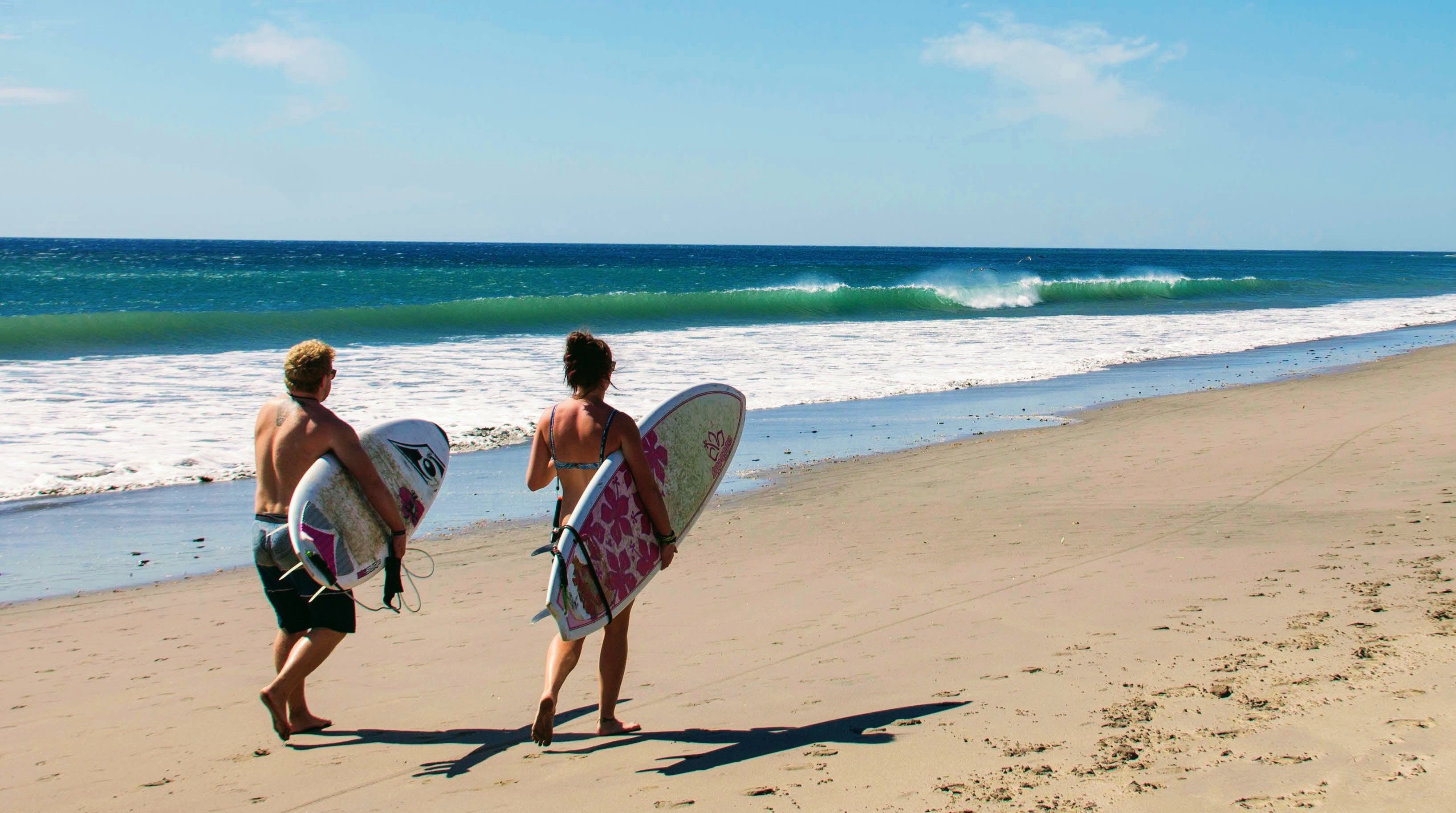
Surfing on the Pacific coast, Costa Rica

Custom Trips Costa Rica Spending Money

Costa Rica Spending Guide

How much spending money do you need for Costa Rica?

Costa Rica sits in an interesting middle ground — more expensive than most of Central America, but better value than you might expect for the quality of the experiences. The key is knowing which stops are pricier and where your money goes furthest. Here's the honest picture across all four stops.

All prices are approximate and in USD. Costa Rica uses the Costa Rican Colón (₡) but USD is widely accepted. Costs vary meaningfully between Tamarindo, Santa Teresa, Monteverde, and Puerto Viejo — tourist-facing prices in Tamarindo run highest; Puerto Viejo offers the best value. Peak season (December–April) adds a premium across the board.
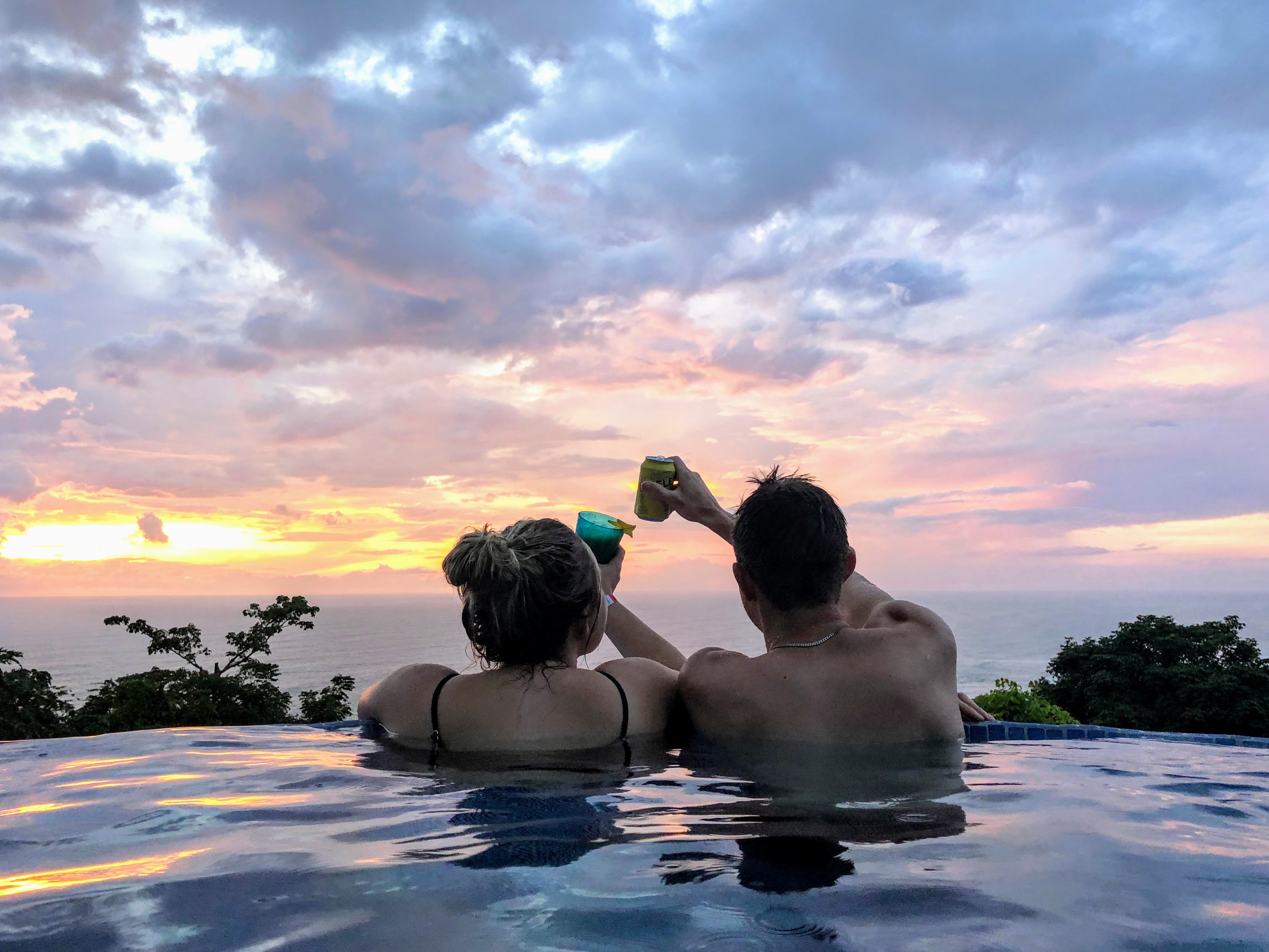
The Honest Picture

More expensive than its neighbours — but worth every colón.

Costa Rica is the most expensive country in Central America and makes no apology for it — a stable democracy, excellent infrastructure by regional standards, and a conservation model that has protected 25% of its territory all cost money to maintain. The prices reflect this. That said, Costa Rica is not expensive by North American or European standards. A fresh fish dinner in Puerto Viejo, a surf lesson in Tamarindo, a guided cloud forest walk in Monteverde, or a ceviche lunch in Santa Teresa all represent remarkable value for the quality of experience they deliver.

The stop where your money goes furthest is Puerto Viejo — the Caribbean coast is significantly more affordable than the Pacific, and the quality of the food and experience is exceptional. The priciest stop on this itinerary is Tamarindo, which has developed the most tourist infrastructure and the prices to match. For a full look at the trip, see our Costa Rica Custom Trips page.

Costa Rica

Daily Budget Guide

What a day in Costa Rica actually costs.

These are realistic daily spending estimates excluding accommodation and transfers — your personal spending money for food, drinks, activities, and everything else day-to-day. Pacific coast days (Tamarindo, Santa Teresa) will generally run higher than Caribbean days (Puerto Viejo).

Budget-Conscious
Comfortable
$70–100
per person / day (approx.)
Sodas (local Costa Rican diners), fresh fruit, cold Imperial beers, a surf lesson, and the national parks. Costa Rica at this level delivers extraordinary value — the wildlife, the beaches, and the food culture are all fully accessible. Puerto Viejo days will sit at the low end; Tamarindo will push toward the top.
Coffee & gallo pinto breakfast$4–8
Casado lunch (soda)$6–12
Fresh fish dinner$15–28
Imperial beer (cold)$2–4
Surf lesson (2hrs)$35–50
National park entry$10–20
Well-Appointed
Relaxed
$120–180
per person / day (approx.)
Good restaurants, guiding services, sunset cocktails, the zip line above Monteverde, snorkelling at Gandoca-Manzanillo, and breakfast at a proper café. This is where most of our clients land — excellent quality at every stop without watching the bill at every meal. The experiences that define the trip — the cloud forest at dawn, the turtle nesting, the Punta Uva beach — are all comfortably within reach.
Café breakfast$8–16
Restaurant lunch$14–28
Dinner (good restaurant)$30–55
Cocktail / craft beer$8–14
Monteverde zip line$45–65
Guided cloud forest walk$25–45
Higher End
Exceptional
$200–320
per person / day (approx.)
Fine dining in Santa Teresa, private surf coaching, a dedicated naturalist guide in Monteverde at dawn, a private catamaran off the Pacific coast, and the Jaguar Rescue Center's behind-the-scenes experience in Puerto Viejo. Costa Rica at this level delivers some of the most extraordinary nature-based luxury experiences in the Americas — at a fraction of what comparable experiences cost in Africa or the Galápagos.
Fine dining dinner$60–120
Private surf coaching (half day)$80–150
Private naturalist guide$80–160
Private catamaran (half day)$120–220
Spa / wellness treatment$60–120
Night tour (private, expert guide)$50–90

Breakdown by Category

What things cost — stop by stop.

Costs vary meaningfully between the four stops on this itinerary. Here's what to expect at each stage.

Food & Drink
BudgetMidHigh
Gallo pinto breakfast (soda)$4–7$8–14$14–22
Casado lunch$6–12$14–24$24–45
Fresh fish dinner$15–28$28–55$55–120
Imperial beer$2–4$4–7$7–12
Fresh coconut water$1–3$2–4$3–6
Cocktail (restaurant)$6–10$10–16$14–24
Gallo pinto breakfast
Budget$4–7
Mid$8–14
High$14–22
Casado lunch
Budget$6–12
Mid$14–24
High$24–45
Fresh fish dinner
Budget$15–28
Mid$28–55
High$55–120
Imperial beer
Budget$2–4
Mid$4–7
High$7–12
Activities & Experiences
BudgetMidHigh
Surf lesson (2 hours)$35–50$50–80$80–150
Monteverde cloud forest entry$24–28$24–28$24–28
Canopy zip line$45–60$45–65
Night walk (guided)$22–30$30–55$55–90
Jaguar Rescue Center$18–22$18–22
Turtle nesting tour (Nov–Mar)$35–50$35–50
Surf lesson (2 hours)
Budget$35–50
Mid$50–80
High$80–150
Cloud forest entry
Standard$24–28
+ guide$50–75
Canopy zip line
Standard$45–65
Night walk (guided)
Group$22–30
Private$55–90
Jaguar Rescue Center
Standard$18–22
Puerto Viejo vs Pacific — The Difference
Pacific (Tamarindo / Santa Teresa)Caribbean (Puerto Viejo)
Beer$3–6$2–4
Dinner for two$50–100$30–60
Coffee$3–5$2–3
Lobster dinner$35–65$20–40
VibeSurf / wellness / developedCaribbean / local / relaxed
Beer
Pacific$3–6
Caribbean$2–4
Dinner for two
Pacific$50–100
Caribbean$30–60
Lobster dinner
Pacific$35–65
Caribbean$20–40
Good to Know
ItemNote
CurrencyCosta Rican Colón (₡) but USD widely accepted everywhere. Cards accepted at most restaurants and hotels. Carry small USD bills for sodas and local vendors.
TippingA 10% service charge is included by law in most restaurant bills. Additional tipping is appreciated for guides and excellent service — $5–10 per person for a guided experience is standard.
SodasThe local Costa Rican diner — typically a family-run restaurant serving casados, gallo pinto, and fresh juice. Always the best value on any street and usually the best food.
Park feesNational park entry fees have risen significantly in recent years — budget $15–28 per person per park. Cabo Blanco (Santa Teresa) and the Monteverde reserves are separate fees.
Currency
Costa Rican Colón (₡) but USD accepted everywhere. Carry small bills for sodas and markets.
Tipping
10% service charge included by law. Extra $5–10/person for guides is appreciated.
Sodas
Local family diners — always the best value and usually the best food on any street.
Park fees
Budget $15–28 per person per park. Cabo Blanco and Monteverde are separate fees.

From Our Experience

How to make your money go further.

01

Eat at the soda — every time

The Costa Rican soda is one of the finest institutions in Central American food culture — a family-run restaurant typically serving the casado (rice, beans, plantain, salad, and a protein), gallo pinto, and fresh natural fruit juice at prices that feel almost implausible. In Santa Teresa, the sodas a block or two back from the beach serve food as good as anything on the main road for a third of the price. In Puerto Viejo, the Caribbean sodas add rice and beans cooked in coconut milk to the repertoire. Always eat at the soda when you find one that looks right.
02

Book Monteverde activities in advance

The Monteverde Cloud Forest Reserve and Santa Elena Reserve both have daily visitor caps, and the zip line and guided walks can sell out during peak season (December–April). Walk-in prices are the same as advance prices, but availability is not guaranteed. We book all Monteverde activities as part of the trip design — the early morning guided walk in particular needs to be pre-arranged with specific naturalist guides who know where the quetzals are nesting that season.
03

Budget more for Tamarindo, less for Puerto Viejo

Tamarindo is Costa Rica's most developed surf town and the prices reflect it — restaurants, activities, and accommodation all run higher here than anywhere else on this itinerary. Puerto Viejo is the most affordable stop, with significantly lower food and drink prices and a local economy that hasn't fully adjusted to tourist-level pricing. Knowing this in advance helps with expectation-setting: the Tamarindo days are an investment, and the Puerto Viejo days are where the trip's budget breathes.
04

The turtle nesting experience is worth every dollar

If you're visiting between November and March, the leatherback turtle nesting experience at Playa Grande near Tamarindo is one of the most extraordinary wildlife encounters available anywhere in the world — guided by local conservation rangers, you watch the world's largest turtle species come ashore at night to nest. The fee ($35–50 per person) goes directly to the conservation programme. There is nothing comparable to this experience and it should be considered non-negotiable if the timing aligns with your trip.
05

Drink fresh coconut water everywhere

Fresh coconut water — machete-opened at a roadside stall, served in the coconut itself — is everywhere in Costa Rica and costs $1–3. In Puerto Viejo it's a cultural institution. It's also one of the best hydration options in tropical heat and significantly cheaper than bottled water at restaurants. Along the Puerto Viejo coastal road, the coconut stalls double as the local food economy and buying from them is the right thing to do in every sense.
06

Ask us before you go

Costa Rica's costs shift meaningfully between stops and between seasons. When we design your trip we give you a clear picture of what to expect at each stage — which restaurants to prioritise, which activities to pre-book, how much cash to carry at each stop, and how to get the most from your spending money across the full ten days. The country rewards those who plan ahead, and that's exactly what we're here for.

Ready to Plan Your Trip?

Let's build your Costa Rica trip.

We handle the surf lessons, the cloud forest guides, the turtle nesting tours, and all the logistics in between — so you can focus on the pura vida. Tell us what draws you to Costa Rica and we'll design the rest.

Flexible payment plans available — just ask.

Plan My Costa Rica Trip travel@fnez.com

More Spending Money Guides

Ready to start planning? Tell us where you want to go →